





Column One-Day Back Pain Treatment and the Effects of Ozone Therapy (PODD) on Disc Herniation and Spinal Canal Stenosis: Report on Our Recent International Training Session Based on The Latest Global Standard Technology
August 12, 2026
Ozone therapy (PODD) is drawing significant attention as a minimally invasive treatment for lumbar disc herniation and spinal canal stenosis. At ILC International Lumbago Clinic Osaka, we conducted an ozone therapy training seminar, inviting Dr. Luigi Cirillo from Bellaria National Hospital in Bologna, Italy—a facility internationally renowned as the birthplace of ozone therapy. Based on insights gained during this seminar, this article provides a detailed explanation of the effects of ozone therapy, its indications, specific procedures, and how it compares with open surgery.
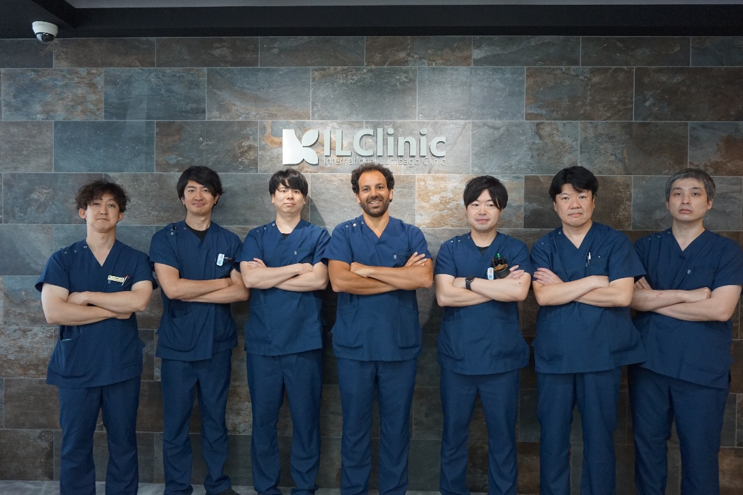
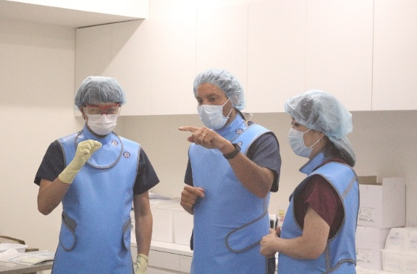
Held over two days on June 29 and 30, the training allowed us to learn the technology from both theoretical and practical perspectives through the actual treatment of four patients.
What Is Ozone Therapy (PODD)? And what is Its Market Positioning in Italy, its Country of Origin?
Ozone therapy is regarded as a treatment method with a lower risk of complications and fewer side effects compared to open surgery. A major advantage is that it can be safely administered multiple times, particularly for patients suffering from chronic pain.
In his lecture, Dr. Cirillo explained the various pathological components of pain, among which muscular, inflammatory, radicular, discogenic, and osteoarticular factors. Pain is often multifactorial rather than attributable to a single cause, and ozone therapy was explained as having the potential to act on multiple factors, including muscular pain, inflammation, and disc herniation.
In Italy, ozone therapy is already widely recognized, and certain applications are covered by public health insurance at national hospitals. Reports indicate that chronic pain sometimes persists even after surgical interventions, underscoring the vital importance of minimally invasive conservative treatment options like ozone therapy.
The Effects of Ozone Therapy on Low Back Pain|Indications for Disc Herniation and Spinal Canal Stenosis
For intradiscal ozone injection therapy, improvement has been reported in 75–90% of cases as an alternative before proceeding to surgery, with findings showing that hernia volume is reduced by approximately 60%. A favorable outcome, defined as a 70% or greater reduction in pain, was achieved in 75% of patients. The effectiveness of the treatment has also been demonstrated in terms of improved quality of life (QOL), reduced medication use, and return to the workplace.
Which Patients are Suitable or Unsuitable for Ozone Therapy? (Indications and Contraindications)
Accurate imaging diagnosis and appropriate patient selection are essential for providing suitable treatment. During the lecture, the roles and limitations of MRI, CT, and X-ray imaging were discussed in detail.
MRI provides detailed visualization of the intervertebral discs and nerve roots. However, it also reveals natural age-related changes in the discs, which do not necessarily correspond to the source of a patient’s pain. Therefore, it is important for clinicians to not only to identify the presence of disc protrusion, but also to accurately correlate its mechanical and inflammatory effects with the patient’s clinical symptoms. Ozone therapy may be indicated for cases in which the herniated disc is relatively soft and where the primary cause is not nerve compression resulting from degenerative changes of the facet joints (degenerative stenosis). On the other hand, in cases of cauda equina syndrome—a very serious condition accompanied by bladder or bowel dysfunction—or severe compression of the spinal cord itself, as well as in cases involving infection, surgical treatment takes priority. There have also been reports in the past of patients with sudden motor paralysis recovering within one month following ozone therapy in cases where there was no severe spinal cord compression.
Specific Ozone Therapy Procedures|Differences Between Muscular, Articular, and Intradiscal Injections
During the seminar, detailed explanations and practical demonstrations of procedures were provided regarding ozone therapy performed under fluoroscopic guidance. Depending on the therapeutic goal and target site, different approaches and needle types are selected:
| Procedure | Indications | Typical Number of Sessions | Key Features |
| Paraspinal / Intramuscular Injection | Chronic low back pain, neck pain, muscle contraction | Approximately 10 sessions | The simplest procedure, using an approach similar to acupuncture |
| Intra-articular / Periradicular Injection | Facet joint inflammation, synovial cysts | Approximately 3 sessions | Precisely targets the affected site under fluoroscopic guidance |
| Intradiscal Injection (Nucleolysis) | Nerve root compression caused by lumbar disc herniation | Single session | Highly specific and most effective. Uses an ultra-fine needle, resulting in very low risk of bleeding and infection. |
Advantages of Intradiscal Injection (Nucleolysis) Performed With an Ultra-Fine Needle
Intradiscal ozone injection is the most specific and effective form of ozone therapy. Compared with other disc treatments, such as radiofrequency procedures and mechanical decompression, ozone therapy can be performed using an extremely fine needle, offering the advantage of a very low risk of bleeding and infection.
Once the needle has reached the intervertebral disc, ozone is injected. If the disc is still properly sealed, the pressure inside the disc will increase as ozone is injected. Once the needle is withdrawn, the pressure returns to its original state, thus confirming the integrity of the disc. However, if the disc is cracked, the ozone may diffuse into the epidural space and appear as a white area on fluoroscopic imaging. Pressure remains even after withdrawal of the needle, and once the needle has reached the area outside the disc near the nerve, a local anesthetic and cortisone may be injected if necessary.
Post-Treatment Rest Period and Precautions to Observe for One-Day Procedures
・Paraspinal / Intramuscular Injections: While complications are few, treatment typically needs to be repeated for about 10 sessions, similar to acupuncture.
・Intra-articular / periradicular injections: Treatment is generally performed over approximately three sessions.
・Intradiscal injections: The treatment is completed in a single session. After approximately one hour of rest following the procedure, the patient can return home. It is recommended to observe light activity for 48 hours following treatment.
Comparison Between Open Surgery and Ozone Therapy (Minimally Invasive Treatment)
A certain proportion of patients are known to experience chronic pain following spinal surgery, a condition commonly referred to as Failed Back Surgery Syndrome (FBSS). Depending on the surgical procedure, some reports have indicated rates of approximately 35%. Compared with the risks associated with surgery, ozone therapy is positioned as a conservative treatment option with fewer complications that can also be repeated as many times as necessary.
Ozone Therapy Seminar at ILC International Lumbago Clinic
The two-day seminar provided a valuable opportunity to connect theory and practice through the actual treatment of four patients. Ozone therapy is an outstanding treatment method that offers high therapeutic expectations while keeping physical strain on the patient to a minimum. Moving forward, ILC International Lumbago Clinic plans to deepen its collaboration with Bellaria National Hospital in Italy, striving to develop and spread ozone therapy techniques.
Dr. Cirillo’s lectures and practical guidance were remarkably comprehensive, covering everything from the fundamentals of ozone therapy to the latest clinical insights and practical techniques. By combining accurate diagnosis, proper patient selection, and finely honed procedures, ozone therapy holds the potential to be an important treatment option for many patients in the near future. We look forward to applying the knowledge and skills gained from this training to our daily practice to deliver even higher quality medical care.
References
- Andreula CF, Simonetti L, De Santis F, et al. Minimally invasive oxygen-ozone therapy for lumbar disk herniation. AJNR Am J Neuroradiol. 2003;24(5):996-1000.(Bellaria Hospital, Department of Neuroradiology)
- Muto M, Avella F. Percutaneous treatment of herniated lumbar disc by intradiscal oxygen-ozone injection. Interv Neuroradiol. 2004.
- Buric J, Rigobello L, Hooper D. Five and ten year follow-up on intradiscal ozone injection for disc herniation. Int J Spine Surg. 2014;8:17.