





Column Treatment Case Report No.272 | ILC International Lumbago Clinic (Osaka Clinic)
October 6, 2026
The patient
A male patient in his 70s.
The patient’s medical history to date
The patient had been suffering from lower back pain caused by disc herniation for approximately seven years.
He had previously visited several orthopedic hospitals, but none had provided any specific treatment.
He was advised to perform lower back exercises regularly and take pain medication as needed.
Recently, his lower back pain became significantly worse after playing golf, and it began to interfere with his daily activities.
The patient visited our clinic seeking to improve symptoms.
Pre-treatment symptoms
Turning over in bed: Easy
Standing up: Easy
Washing the face: Slightly difficult
Stooping posture / standing for a prolonged time: Easy
Sitting for a long time: Easy
Lifting or holding heavy objects: Slightly difficult
・Pain levels before treatment
| Lower Back | Lower Limbs | Numbness | Buttocks | |
|---|---|---|---|---|
| Pain level | 6 | 4 | 3 | 5 |
No pain at all is rated as 0, and the maximum possible pain is rated as 10.
Main areas of symptoms: lower back to buttocks.
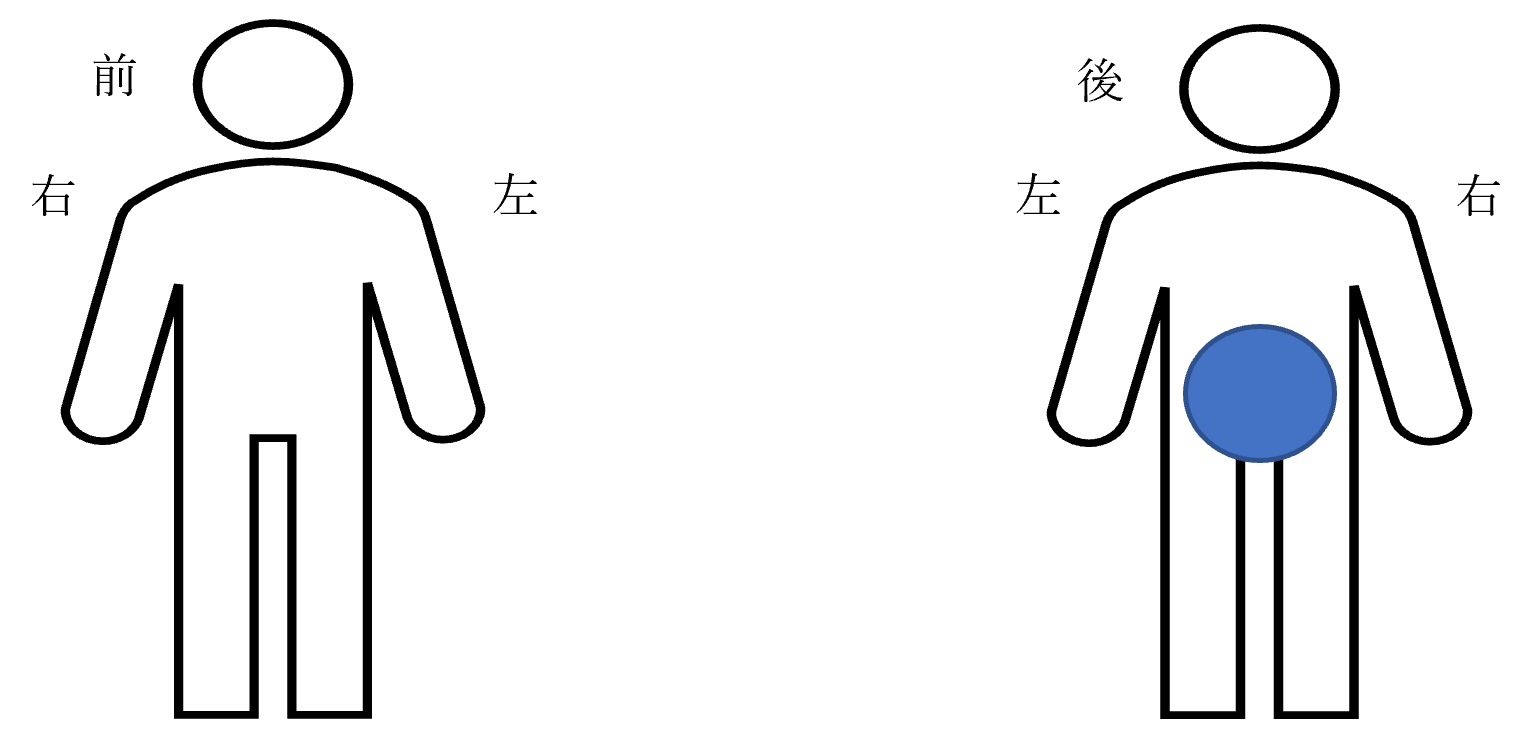
Bending forward: no problem
Bending backward: no problem
Lasegue test: negative
Point of tenderness: negative
Coughing and sneezing: no aggravation
Additional explanations on our clinic’s medical examination
Imaging and findings
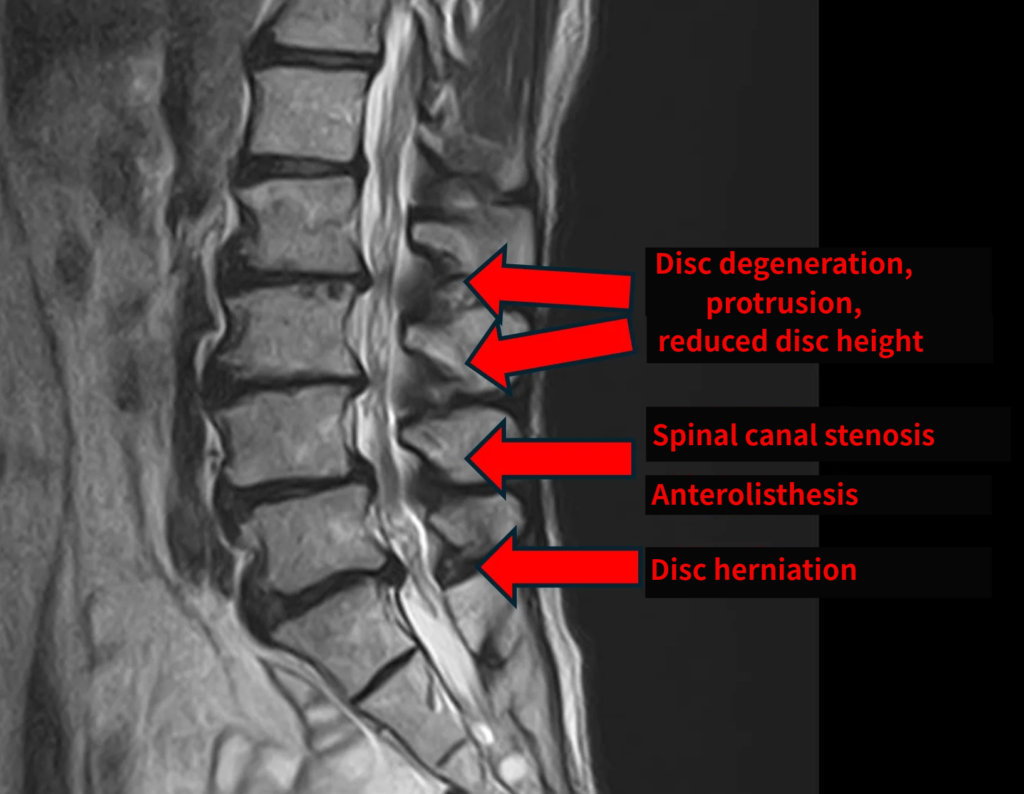
- L2/3: Disc degeneration, disc bulging, reduced disc height, foraminal stenosis, and endplate degeneration
- L3/4: Disc degeneration, disc bulging, reduced disc height, foraminal stenosis, spinal canal stenosis, and endplate degeneration
- L4/5: Disc degeneration, disc bulging, foraminal stenosis, spinal canal stenosis, endplate degeneration, and anterolisthesis
- L5/S1: Disc degeneration, disc herniation, foraminal stenosis, spinal canal stenosis, endplate degeneration, and retrolisthesis
These findings were identified on imaging.
Compression of the spinal canal associated with disc abnormalities at L2/3, L3/4, L4/5, and L5/S1 was considered highly likely to be the cause of the patient’s symptoms.
Treatment
After consulting with the patient, the Cellgel Method was performed on L2/3, 3/4, 4/5 and 5/s.
The treatment was performed by Dr. Ohara.
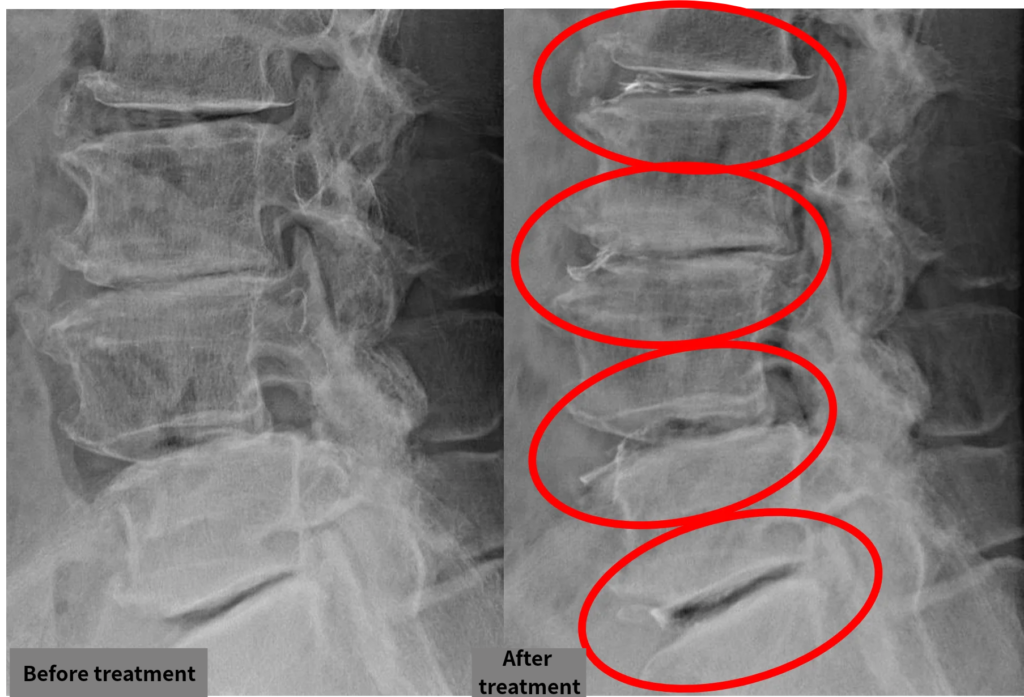
The treatment took about 40 minutes.
After resting in the recovery room, the patient walked out of the clinic on his own.
Our Clinics’ Treatment
Additional information about the Cellgel method we have introduced in this column.
Cost of the Cellgel method: 1,320,000 yen per area (including tax) to 1,760,000 yen per 5 areas (including tax)
Risks and side effects of the Cellgel method: Transient pain may occur after treatment. Nerve damage is not a zero possibility due to the very nature of the treatment, but there have been no reports of damage so far in either report cases or publications. There is a very small possibility of allergic reactions to local anesthetics. Symptoms may temporarily worsen during the first week or two after treatment. This is believed to be due to the decompression effect of the implant, which retracts the surrounding tissues. In addition, if the disc is almost completely collapsed, treatment may be difficult. The doctor hold a consultation with you during your visit to the clinic to determine the best treatment option for your condition.
For more detailed information, please refer to the following links:
Blog page explaining the Cellgel Method in an easy-to-understand manner
The Cellgel Method on our treatment methods page