





Column The Strong Connection Between Lower Back Pain and a Hunched Posture: Recommended Stretches to Restore Proper Posture
October 9, 2026
A hunched posture, characterized by a rounded back, places excessive strain on the muscles and joints of the lower back.
For that reason, it can sometimes lead to lower back pain.
In this article, we explain the relationship between a hunched posture and lower back pain.

Causes of a Hunched Posture
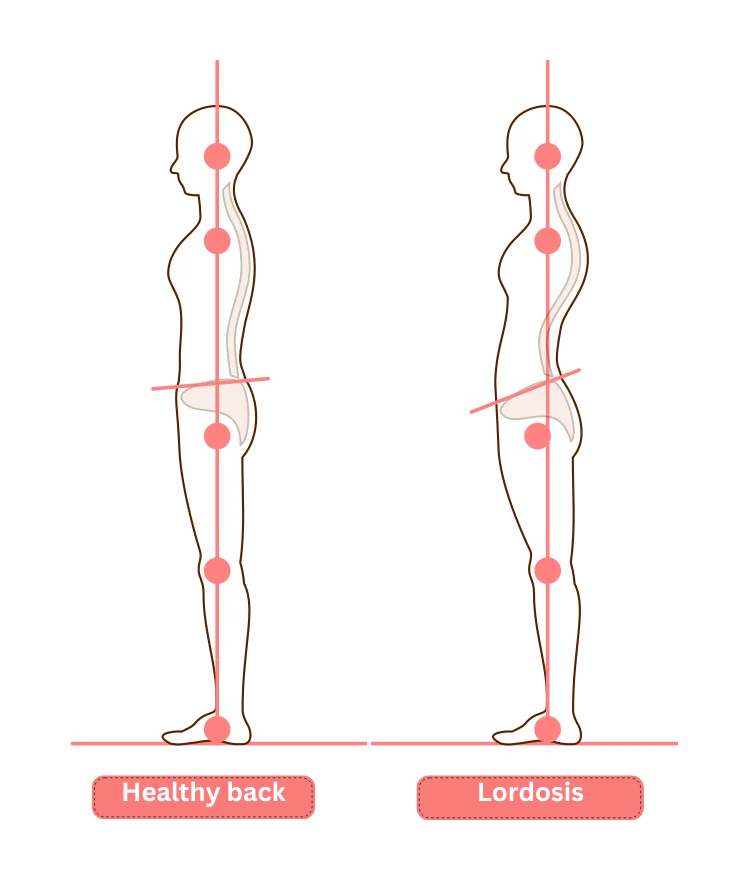
A hunched posture occurs when the pelvis tilts backward, causing the spine to lose its natural curves and placing excessive strain on the muscles and joints of the lower back. This can lead to lower back pain.
A combination of several factors can contribute to a hunched posture.
Poor Posture
Leaning forward while sitting or frequently resting your back against the backrest of a chair can make you more prone to developing a hunched posture.
Standing or walking with your head down also keeps you leaning forward all the time, which leads to a hunched back.
Staying in the Same Position for Long Periods
Remaining in the same position for extended periods is another cause of a hunched posture.
When you sit in the same position for a long time, such as during desk work, the muscles from your neck to your lower back can become stiff. Your body may also become more prone to postural misalignment.
Lack of Exercise
Insufficient physical activity can lead to reduced muscle strength and a decline in physical function.
As a result, it may become difficult to maintain proper posture, potentially leading to a hunched back.
Chest Breathing
People who spend much of their day sitting at work may be more likely to rely on chest breathing.
Chest breathing is a method of breathing that expands the rib cage rather than the abdomen. Because it does not make sufficient use of the diaphragm, the diaphragm muscles may weaken, along with the muscles that support the trunk. When these core muscles become weak, it is harder to maintain proper posture, making a hunched posture more likely.
How a Hunched Posture Causes Lower Back Pain
Posterior Pelvic Tilt and Loss of the Spine’s Natural Curve
When you develop a hunched posture, your pelvis tends to tilt backward.
The lumbar spine, which naturally curves forward (lumbar lordosis), becomes straight and flattened. This causes pressure to be distributed unevenly across the spine and intervertebral discs. The resulting excessive stress on the discs can lead to lower back pain.
Constant Tension in the Lower Back Muscles
A rounded-back posture also places strain on the muscles.
As a result, the muscles along the back, such as the erector spinae, remain stretched and under constant tension. As fatigue accumulates, lower back pain may develop.
Reduced Blood Flow and Buildup of Fatigue-Related Substances
When muscles remain tense, they become stiff. This can compress blood vessels and impair circulation.
As a result, oxygen and nutrients may not reach the muscles adequately. The accumulation of fatigue-related substances can then contribute to pain and muscle stiffness.
Imbalance Between the Front and Back Muscles
With a hunched posture, the muscles along the back become tight, while the abdominal muscles are used less and may weaken.
This imbalance in muscle strength increases the strain on the lower back.
Effective Stretches for Improving a Hunched Posture
A hunched posture may improve through stretches performed consistently over time.
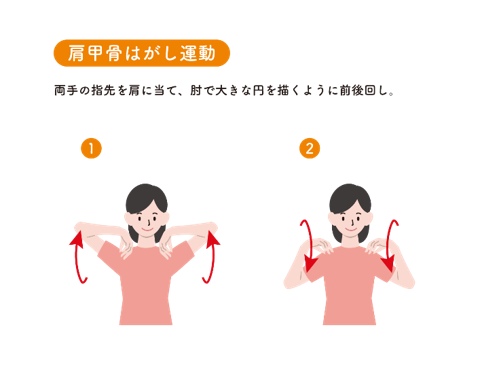
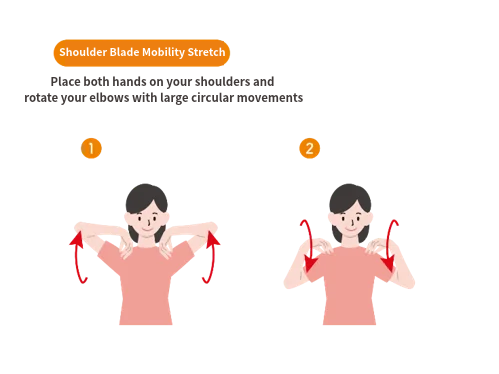
Shoulder Blade Mobility Stretch
This stretch opens up the back and shoulders and can help improve a hunched posture.
- Sit up straight and place both hands on your shoulders.
- Make large circular movements with your elbows, rotating forward 10 times and backward 10 times.
Knee-to-Chest Stretch
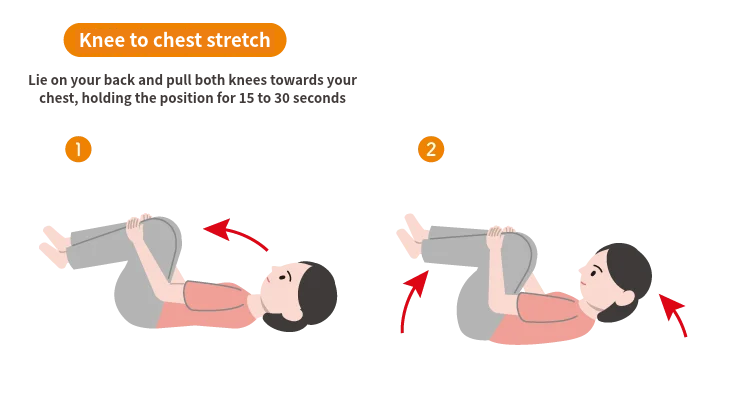
This stretch helps relieve tightness in the back and prevent the pelvis from tilting backward.
- Lie on your back, pull both knees toward your chest, and hold for about 30 seconds.
- Repeat 2 to 3 times.
Thoracic Spine Stretch
By opening the chest and loosening the back, this stretch aims to help improve a hunched posture.
- Roll up a bath towel into a cylindrical shape.
- Lie on your back and place the rolled towel beneath your upper back, around the area just below your shoulder blades.
- Extend both arms out to the sides. Take 5 to10 deep breaths and feel your chest gently loosen.
Be Mindful of Your Posture in Daily Life
To help prevent a hunched posture, try to maintain the spine’s natural S-shaped curve. When viewed from the side, your ears, shoulders, hip joints, and ankles should form a straight vertical line.
When Sitting
Sit deep in your chair and keep your pelvis upright rather than relying too heavily on the backrest.
Imagine that a string is gently pulling the top of your head toward the ceiling. Lightly engage the area below your navel to tighten your lower abdomen.
When Standing and Walking
Gently tuck your chin in and look straight ahead.
Relax your shoulders, open your chest in a natural way, and gently draw your shoulder blades together.
Plant your whole foot firmly on the ground and walk with your back straight.
When Using a Smartphone or Computer
When using a smartphone, avoid bending your head down to look at the screen. Instead, raise the phone to approximately face level.
Adjust your computer monitor so that its upper edge is at eye level. This can help prevent a hunched posture (text neck) and promote a forward head posture.
Avoid sitting continuously for long periods. Stand up once every 30 minutes and loosen up your body with a stretch or some light exercises.
Treatment at Our Clinics
When you have lower back pain, a fundamental treatment addressing the underlying cause may also become necessary at some point.
Our clinic provides treatment for lower back pain caused by intervertebral disc damage.
The Cellgel Method involves injecting a therapeutic agent into the cracks in the intervertebral disc. The substance then forms a gel-like implant that fills and reinforces the damaged areas. This may help prevent further disc degeneration and may serve as a fundamental treatment approach that addresses the underlying disc damage
Unlike procedures that reduce the volume of the intervertebral disc, the Cellgel Method leaves a gel-like implant within the disc after treatment, helping preserve the disc’s volume and structure.
Click here to learn more about the Cellgel Method
In addition, our affiliated OJ Wellness Center incorporates approaches from traditional East Asian medicine and Ayurvedic medicine to support people experiencing various forms of lower back pain across a wide range of age groups.
Click here to learn more about the OJ Wellness Center
If you are experiencing lower back pain, please consider scheduling a consultation at our clinic.
Supervising Physician:
Dr. Tadaaki MINOWA
Administrative Director at ILC Tokyo
Affiliations / Certifications
Japan Low Back Pain Association
Japan Society of Endoscopic Surgery
Certified Industrial Physician, Japan Medical Association
Cellgel Treatment Method Certified Doctor
Florence Method Certified Doctor
Q-Florence Method Certified Doctor
Ozone Treatment Certified Doctor
Related Articles
Low Back Pain and Posture: Reducing Pain by Adopting the Correct Posture
Lower Back Pain and Postural Improvement: Prevent Pain with The Correct Posture