





Column If You Cannot Determine the Cause of Your Lower Back Pain: The Right Timing to Consult a Specialist
October 23, 2026
Some patients who suffer from lower back pain feel frustrated because they fail to find the cause of their symptoms, regardless of how many medical facilities they visit.
In this article, we explain the various causes of lower back pain and our clinic’s diagnostic process.

Causes of Back Pain
Movements in everyday life, such as how you sit, how you sleep, and the way you carry your bag or luggage, can sometimes place excessive strain on the lower back. When the lumbar spine is subjected to continuous stress for too long, the intervertebral discs and other structures will gradually undergo degeneration.
As disc degeneration progresses, conditions such as disc herniation may develop, and lead to deformity of the joints and other structures, eventually resulting in spinal canal stenosis. Spinal canal stenosis (a condition in which the spinal canal becomes narrow) is also a common cause of lower back pain for people in their 60s and older.
A lack of regular exercise can also lead to muscle weakness, which may contribute to lower back pain.
In particular, when the muscles that support the spine and pelvis become stiff, misalignment of the lumbar spine and pelvis may occur, potentially worsening lower back pain.
Specific and Nonspecific Lower Back Pain
Lower back pain can be classified into two types, specific and nonspecific.
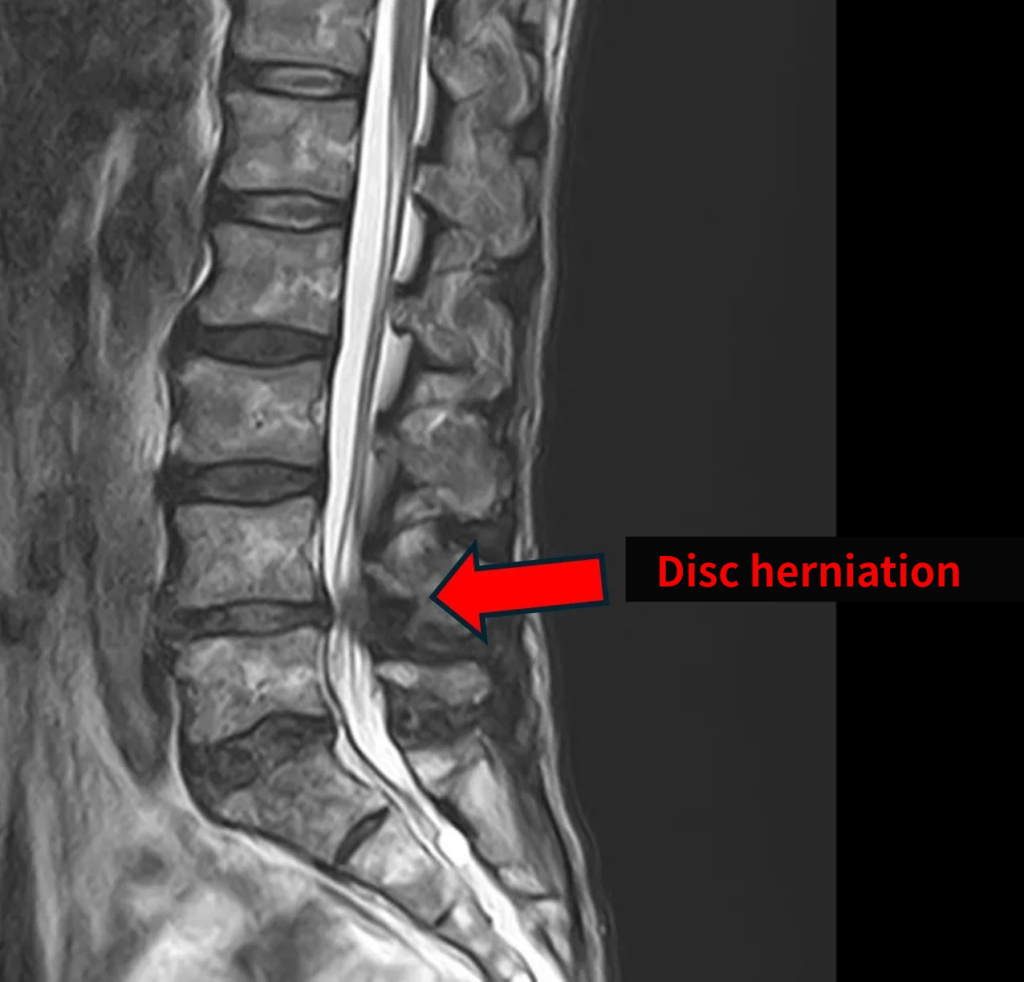
Specific lower back pain has an identifiable cause, such as disc herniation or spinal canal stenosis, and its underlying cause can be identified through imaging examinations such as MRI scans.
Nonspecific lower back pain is more difficult to distinguish through imaging examinations such as MRI. It is estimated that approximately 85% of lower back pain cases are nonspecific.
When to Consult a Specialist About Lower Back Pain
According to the Clinical Practice Guidelines for the Management of Lower Back Pain, the following symptoms are considered warning signs. If you experience any of these, seeking immediate medical attention is recommended.
・Onset before the age of 20 or after the age of 55
・Lower back pain unrelated to the time of the day or any physical activity
・Chest pain
・Prior medical history of cancer, steroid treatment, or HIV infection
・Malnutrition
・Weight loss
・Widespread neurological symptoms
・Structural spinal deformity
・Fever (*1)
In addition to lower back pain, if you experience neurological symptoms—such as severe pain or numbness extending from the buttocks to the thighs and calves, difficulty walking, or problems with urination or bowel movements—we recommend consulting a specialist without delay. The same applies if your back pain has not improved after more than two weeks or if the pain is progressively worsening.
(*1) Source: Japanese Orthopedic Association, Clinical Practice Guideline Committee, and the Committee for the Development of Clinical Practice Guidelines for the Management of lower Back Pain, eds., Clinical Practice Guidelines for Low Back Pain 2019, Nankodo, 2020.
Our Diagnostic Process
At our clinic, in addition to imaging examinations such as MRI, we ask patients about their symptoms, including lower back pain, numbness, and difficulty walking. We also explore each patient’s lifestyle and personal circumstances in detail, taking a multifaceted approach to analyzing the causes of back pain.
Imaging Diagnosis with X-rays and MRI
X-ray images mainly show the condition of the bones. The intervertebral discs are cartilage and do not appear on X-rays, so it is impossible to diagnose conditions such as disc herniation from X-rays alone. However, X-rays are essential to check whether there are any diseases other than herniation that could be causing the lower back pain.
MRI examinations are essential for diagnosing conditions such as disc herniation and spinal canal stenosis. MRI images are used to assess changes in the intervertebral discs, nerves, ligaments, and joints that may be related to back pain. They also help identify the degree of nerve compression, the presence of damage, and signs of inflammation.
Physical Examinations During the Consultation
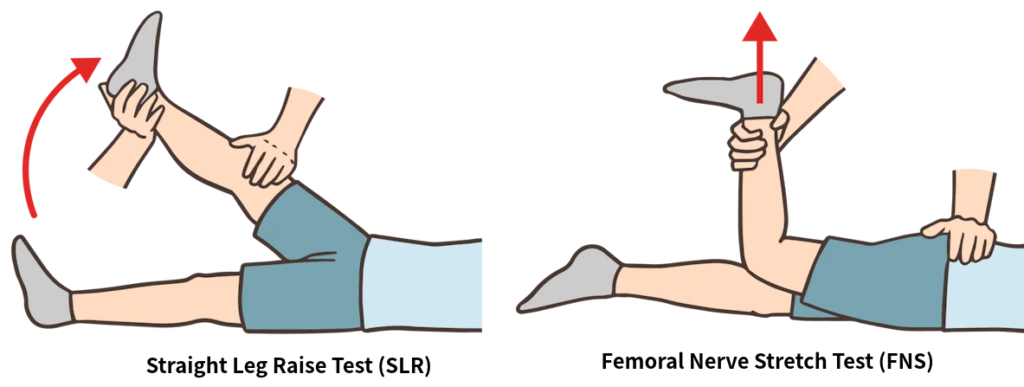
In addition to imaging examinations, we conduct physical tests during the consultation. For example, we ask patients to lean forward and bend backward to check whether these movements trigger symptoms. This helps us assess conditions such as disc herniation and spinal canal stenosis.
We also check leg pain with the straight leg raise (SLR) test and femoral nerve stretch (FNS) test, during which we raise the patient’s leg to assess the pain.
Other Medical Tests
At our clinic, we may also combine tests using ultrasound diagnostic equipment and nerve conduction studies to help identify subtle abnormalities and clarify the underlying causes of pain.
When chronic stress, anxiety, or difficult past experiences accumulate, the areas of the brain responsible for processing pain may become hypersensitive. As a result, even after the physical problem has been resolved, the brain may continue to generate pain signals on its own. This can cause a person to feel intense pain in response to a minor stimulus or to experience pain in situations that would not normally cause pain.
To identify these brain-related signs, our clinic first conducts an examination such as MRI to check that there is no obvious physical cause. We then conduct a detailed interview and a psychological assessment. Based on these findings, we comprehensively evaluate whether the pain is physical or due to excessive activity in the brain.
Through this process, we are able to identify both the causes of back pain that can be seen on imaging and those that cannot. We then recommend treatment tailored to each patient’s individual needs.
Treatment at Our Clinics
Our clinic provides treatment for lower back pain caused by intervertebral disc damage.
The Cellgel Method involves injecting a therapeutic agent into the cracks in the intervertebral disc. The substance then forms a gel-like implant that fills and reinforces the damaged areas. This may help prevent further disc degeneration and may serve as a fundamental treatment approach that addresses the underlying disc damage
Unlike procedures that reduce the volume of the intervertebral disc, the Cellgel Method leaves a gel-like implant within the disc after treatment, helping preserve the disc’s volume and structure.
Click here to learn more about the Cellgel Method
In addition, our affiliated OJ Wellness Center incorporates approaches from traditional East Asian medicine and Ayurvedic medicine to support people experiencing various forms of lower back pain across a wide range of age groups.
Click here to learn more about the OJ Wellness Center
If you are experiencing lower back pain, please consider scheduling a consultation at our clinic.
Supervising Physician:
Dr. Tadaaki MINOWA
Administrative Director at ILC Tokyo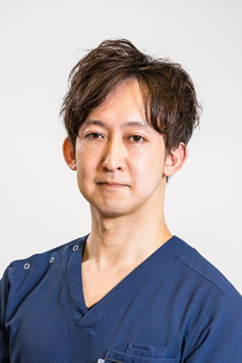
Affiliations / Certifications
Japan Low Back Pain Association
Japan Society of Endoscopic Surgery
Certified Industrial Physician, Japan Medical Association
Cellgel Treatment Method Certified Doctor
Florence Method Certified Doctor
Q-Florence Method Certified Doctor
Ozone Treatment Certified Doctor
Related Articles
Causes and Prevention of Back Pain: A Guide for Patients Over 60
Is Stress Causing Your Lower Back Pain? The Hidden Truth About Psychogenic Back Pain
A Medical Expert Explains The Surprising Connection Between Lower Back Pain and Internal Organs