





January 9, 2026
Spondylolisthesis is considered one of the most common spinal disorders, alongside lumbar disc herniation and lumbar spinal canal stenosis.
In this article, we explain spondylolisthesis and its relationship with physical inactivity.
What is Spondylolisthesis?🦴
Lumbar spondylolisthesis refers to a condition in which a vertebra in the lower back slips out of its normal position.
There are two main types of spondylolisthesis:
Posterior slippage (retrolisthesis) where the vertebra slips backward
Anterior slippage (anterolisthesis) where the vertebra slips forward
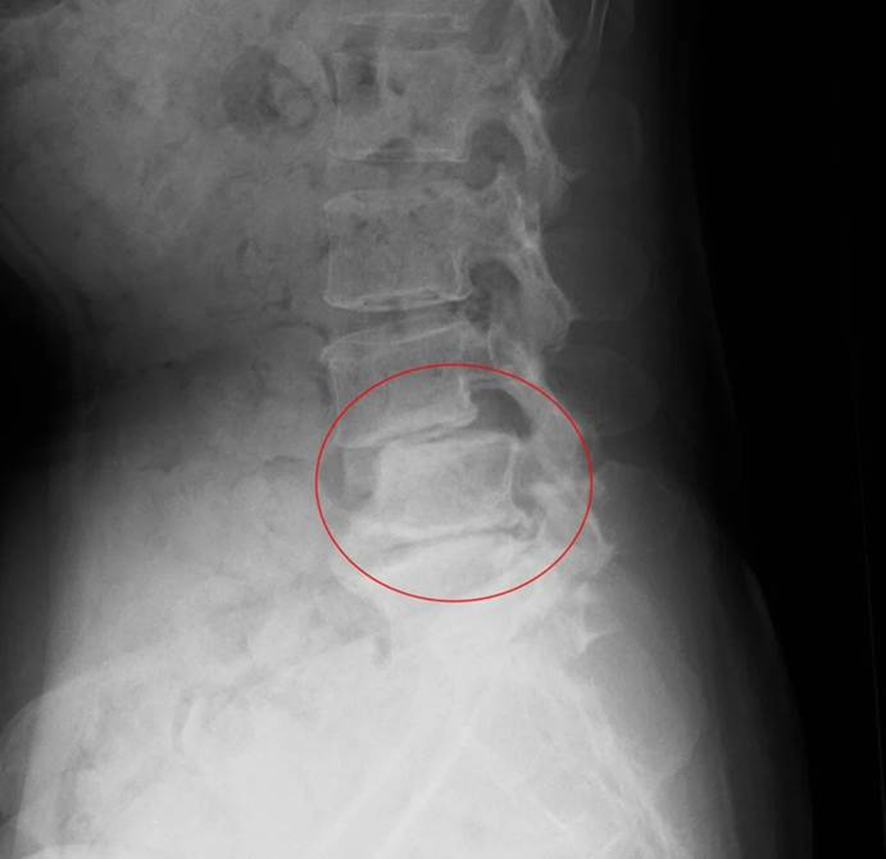
Common Symptoms of Spondylolisthesis
Mild lumbar spondylolisthesis is often asymptomatic. In some cases, patients undergo medical examinations only after symptoms appear, by which time the condition may already have progressed.
The main symptoms of lumbar spondylolisthesis include low back pain, as well as pain and numbness in the buttocks and lower extremities.
One common symptom of spondylolisthesis is pain or numbness in the buttocks or legs that appears during walking. This condition is known as intermittent claudication, in which symptoms improve after a short period of rest, allowing the patient to resume walking eventually.
Degenerative spondylolisthesis is often accompanied by spinal canal stenosis, and symptoms associated with stenosis—such as urinary dysfunction—may occur.
In cases of isthmic spondylolisthesis, pain may worsen during movements that place stress on the pars defect (for example, lumbar extension). If nerve roots are compressed at the defect site, pain or numbness in the lower extremities may also occur.
The Vicious Cycle of Spondylolisthesis and Physical Inactivity🔄
Spondylolisthesis is closely associated with physical inactivity.
Pain and numbness caused by spondylolisthesis restrict daily activities. In an effort to avoid pain, patients may unconsciously reduce movement, leading to physical inactivity.
Prolonged inactivity causes weakening of the abdominal muscles, back muscles, and core muscles that support the lower back. As muscle strength declines, these muscles become less able to support the spine, increasing lumbar instability. This can worsen vertebral slippage and intensify pain and other symptoms.
As pain increases, patients tend to avoid movement even more, creating a vicious cycle.
How to Break the Cycle: Recommended Exercises 🧘
To break the cycle between spondylolisthesis and physical inactivity, it is important to gradually incorporate exercise while appropriately managing pain.
Before starting any exercise program, patients should consult a specialist to determine the type and intensity of exercise best suited to their condition.
Low-Impact Aerobic Exercises
Low-impact aerobic exercises that place minimal stress on the lower back, such as walking, water walking (in a pool), and cycling, are effective.

Stretching
Maintaining muscle flexibility helps reduce strain on the lower back.
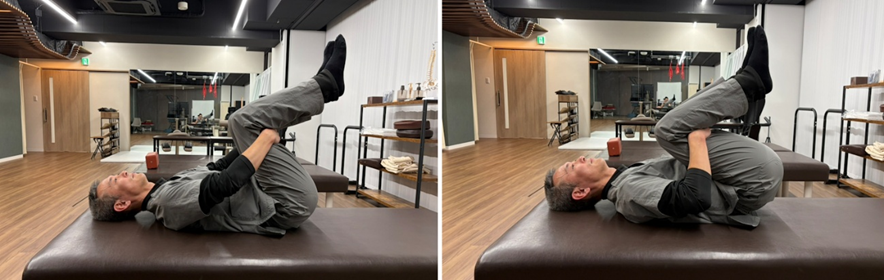
・Stretching the Lumbar Spine and Surrounding Muscles
This stretch targets the latissimus dorsi (from the back to the lower back) and the gluteus maximus (from the lower back to the buttocks).
This stretch helps maintain lumbar flexibility and reduces stress on the lower back.
How to perform:
- Lie on your back on the floor
- Bend both knees, clasp them with both arms, and gently pull them toward your chest
- Hold for 20–30 seconds
Perform approximately three times a day.
・Back Muscle Stretch
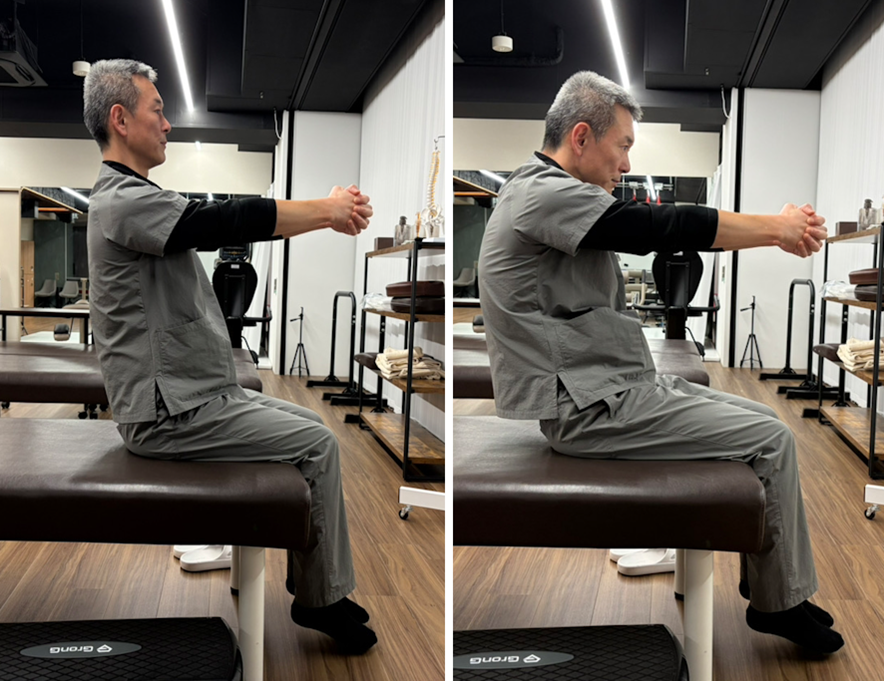
The back muscles connect adjacent vertebrae. When these muscles are tense, the space between vertebrae narrows, placing additional stress on the lower back.
The following stretch helps relax the back muscles and reduce lumbar strain.
How to perform:
1. Sit on a chair
2. Interlace your hands in front of your body and extend them forward
3. Round your lower back, imagining a rounded space between your hands and abdomen, and hold for 5 to 10 seconds
4. Return to the starting position
・Iliopsoas Muscle Stretch
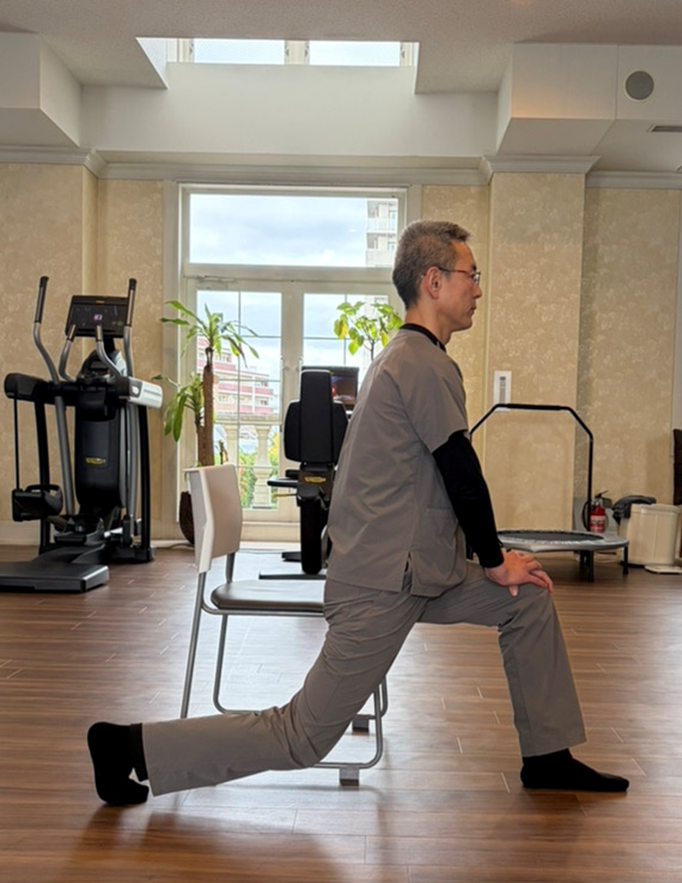
The iliopsoas muscle connects the trunk and lower extremities. Many iliopsoas stretches involve lumbar extension; however, lumbar extension is not recommended for patients with spondylolisthesis.
A chair-based stretch is recommended.
How to perform:
1. Sit on a chair at a height that allows both feet to rest flat on the floor, sitting with half of one foot and half of the buttocks off the edge
2. Move the extended leg backward
3. Confirm that you feel the stretch around the front of the hip and hold for 10 seconds
*Keep your toes pointed upward during the stretch.
Perform three repetitions on each side every morning.
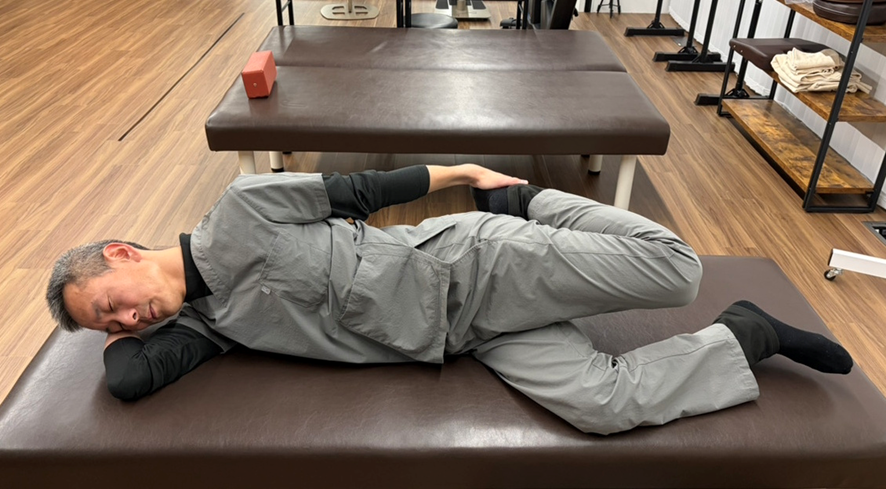
・Stretching the Front of the Thigh (Quadriceps)
The muscles on the front of the thigh extend from the pelvis to the knee. Tightness in these muscles can cause anterior pelvic tilt, which increases lumbar extension and places excessive stress on the lower back.
Stretching these muscles helps reduce lumbar strain.
How to perform:
1. Lie on your side on the floor
2. Hold the ankle of the upper leg with the upper hand and pull the heel toward the buttocks
3. When you feel a stretch in the front of the thigh, hold for 30 seconds while breathing deeply
4. Repeat on the opposite side
Be careful not to arch your lower back.
Perform approximately three times a day.
Our Clinics’ Treatments💉
The Cellgel Method
Recent studies suggest that intervertebral disc degeneration is a contributing factor in the development of spondylolisthesis. (*1)
For this reason, we believe that preventing progression of spondylolisthesis first requires treating the degenerated discs. At our clinic, we perform the Cellgel Method for spondylolisthesis caused by disc degeneration.
With the Cellgel Method, a specialized agent is injected into cracks within the intervertebral disc. The agent solidifies into a gel, filling and reinforcing the damaged areas and enabling a fundamental treatment approach.
Disc volume is preserved, and the gel remains within the disc as an implant after treatment, allowing the disc to be maintained.
Unlike conventional surgery, the Cellgel Method does not require incisions, resulting in a lower risk of postoperative complications.
👉 Click here to learn more about the Cellgel Method
(*1): I. Akkawi, H. Zmerly. Degenerative Spondylolisthesis: A Narrative Review. Acta Biomedica, vol. 92, No.6, 2021.
The Florence & Q-Florence Methods
The Florence Method and Q-Florence Method are low-risk, minimally invasive treatments.
Under local anesthesia and sedation, a device is inserted percutaneously to widen the narrowed spinal canal.
By placing the device, spinal stability is improved while preserving spinal rotation and flexion. The procedure expands the spinal canal, suppresses disc protrusion, and reduces hypertrophy of the ligamentum flavum.
As the spinal canal widens, pain and neurological symptoms are relieved.
👉 Click here to learn more about the Florence Method
👉 Click here to learn more about the Q-Florence Method (article in Japanese)
If you are experiencing symptoms of spondylolisthesis, we encourage you to consider scheduling a consultation at our clinic.
Related Articles
Is it Spondylolisthesis? How to Check if You Have The Symptoms
The Daily Movements and Exercises That You Should NEVER Do if You Have Lumbar Spondylolisthesis
Management Strategies for Spondylolisthesis Based on Symptoms