





Column Treatment Case Report No. 64| ILC International Lumbago Clinic (Nagoya Clinic)
June 1, 2026
The patient
A male patient in his 50s.
The patient’s medical history to date
The patient has experienced lower back pain since his junior high school years. Around the age of 45, he suffered his first acute strained back, which improvednaturally with rest. Since then, the condition has relapsed several times, including another episode of a strained back a few years ago. At the end of January 2026, his lower back pain severely worsened upon waking up. He underwent X-ray and MRI scans at another hospital and was diagnosed with a right herniated disc at L5/S, which was managed with medication and nerve block injections. Two weeks ago, he became immobile after experiencing a sharp, sudden snapping pain in his lower back while in the bath. He reports feeling relatively well today.
Pre-treatment symptoms
・Pain levels before treatment
| Lower back | Lower limbs | Numbness | Buttocks | |
|---|---|---|---|---|
| Pain level | 10 | 1 | 7 | 8 |
No pain at all is rated as 0, and the maximum possible pain is rated as 10.
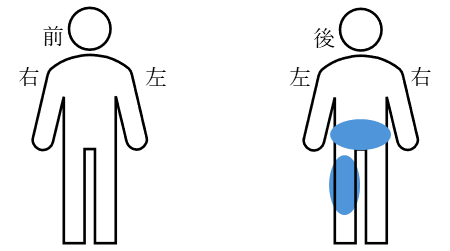
Main areas of pain and numbness: Lower back, left buttock, and left lower limb.
Bending forward: Left buttock pain
Bending backward: Low back pain
Lasegue test: Positive
Point of tenderness: L3/4 left, L5/S right
Point of tenderness: negative
Click here for additional explanations on our clinic’s medical examination
・Daily activities
Previously played soccer; currently does not participate in sports activities.
Imaging and findings
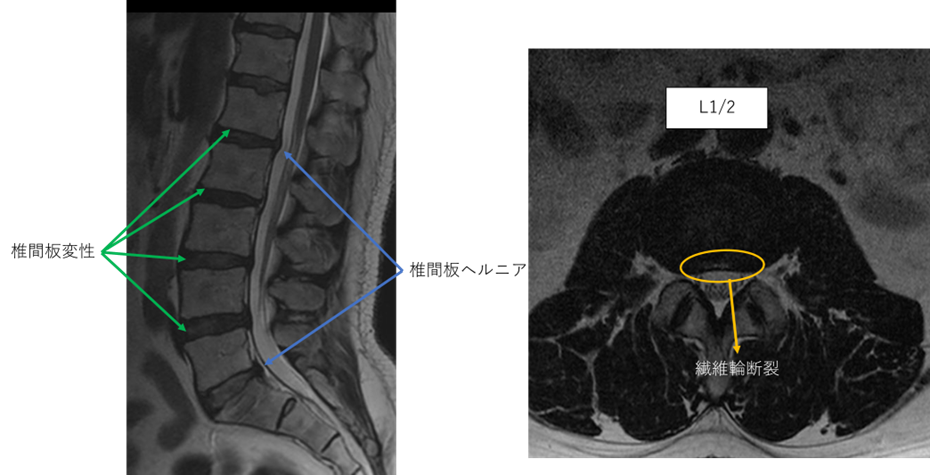
L1/2: Disc herniation, disc degeneration disease
L5/S: Disc herniation
L2/3: Disc degeneration disease, annular tear
L3/4: Mild disc degeneration
L4/5: Disc degeneration disease
The above findings were also observed on the imaging.
Disc herniation, degenerative disc disease, and annular tear were identified at L1/2, L2/3, and L4/5, and were considered highly likely to be the primary cause of the patient’s symptoms.
Treatment
After consulting with the patient, the Cellgel Method was performed on L1/2, 2/3 and 4/5.
The treatment was performed by our administrative director, Dr. Minowa.
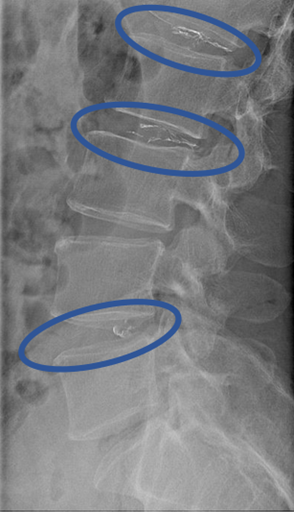
This is an image of the Discogel inserted into the intervertebral disc.
The treatment took about 30 minutes.
After resting in the recovery room, the patient was able to walk home by his own means.
Our Clinics’ Treatment
Additional information about the Cellgel method we have introduced in this column.
Cost of the Cellgel method: 1,320,000 yen per area (including tax) to 1,760,000 yen per 5 areas (including tax)
Risks and side effects of the Cellgel method: Transient pain may occur after treatment. Nerve damage is not a zero possibility due to the very nature of the treatment, but there have been no reports of damage so far in either report cases or publications. There is a very small possibility of allergic reactions to local anesthetics. Symptoms may temporarily worsen during the first week or two after treatment. This is believed to be due to the decompression effect of the implant, which retracts the surrounding tissues. In addition, if the disc is almost completely collapsed, treatment may be difficult. The doctor hold a consultation with you during your visit to the clinic to determine the best treatment option for your condition.
For more detailed information, please refer to the following links:
Blog page explaining the Cellgel Method in an easy-to-understand manner
The Cellgel Method on our treatment methods page