





Column Are You Monitoring Your Pelvic Misalignment? A Diagnosis of Pelvic Tilts Based on Type and How It Relates to Back Pain
May 15, 2026
Pelvic misalignment can sometimes contribute to low back pain.
In this article, we will examine the different types of pelvic tilts, their underlying causes, and introduce specific methods for improvement.
Types of Pelvic Tilts and Their Respective Causes
Pelvic tilts can be broadly categorized into three primary structural categories.
Left-Right Imbalance Type
This type refers to a condition where the left and right sides of the pelvis are at different heights.
It is commonly observed in individuals whose buttocks have a square shape or who experience chronic tightness along the outer thighs.
Causes of lateral misalignment include poor posture (rounded shoulders), an arched lower back, or consistently shifting your weight onto one leg while standing.
Anteroposterior Tilt Type (Front-Back Misalignment)
An anteroposterior tilt refers to a condition where the pelvis is tilting excessively, either forward (anterior pelvic tilt) or backward (posterior pelvic tilt).
This is common among people with sagging buttocks, an arched lower back, or excess weight in the lower body, and is said to be caused by weak muscles or the habit of wearing high heels.
Outflare Type (Open Pelvis)
Mechanical changes caused by pregnancy and childbirth, or habit patterns such as sitting cross-legged (sitting Indian style) or crossing one’s legs while sitting in a chair.
It is highly prevalent among individuals with bowlegs, or with persons prone to putting on weight in the lower body.

Risks Associated With Pelvic Tilt
When the pelvis is misaligned, it can lead to a noticeable shift in physical outline and posture.
Beyond the obvious cosmetic changes, structural distortion frequently triggers shoulder stiffness, lower back pain, hypersensitivity to cold (poor blood circulation), and lower limb swelling.
Because the pelvis acts as the structural cradle for your internal organs, a misalignment can compromise abdominal function, worsening chronic constipation. In women, it can lead to significant intensification of menstrual cramps.
Furthermore, a displaced pelvis can lead to diminished visceral function and a lower basal metabolic rate, which can severely aggravate hypersensitivity to cold.
Self-Check Methods for Pelvic Tilts
There are several simple ways to check for pelvic imbalance by yourself.
Stand with your back against a wall
Stand flat against a wall with your heels, buttocks, upper back, and head touching it. If you can smoothly slide just the thickness of a single palm into the space between your lower back and the wall, your pelvic tilt is normal. If the gap is significantly wider, your pelvis likely tilts forward (anterior tilt); if the gap is too narrow, it indicates a backward tilt (posterior tilt).
Place both hands on your hips
Place both hands on your hips and compare the height where your thumbs touch the bones.
If one side appears higher, this indicates a left-right misalignment.
Shuffle your feet without moving
Stand straight with your eyes closed and walk in place about 50 times. When you open your eyes, check if your position has shifted.
If you’ve shifted significantly forward, backward, left, or right, it means your pelvis is tilted in that direction.
Lying on your back
Lie on your back with your knees bent and check the position of your left and right knees. If the height of your knees differs, it indicates a pelvic tilt.
Also, while lying on your back with both knees bent, tilt them side to side to check for twisting. If there is misalignment, you will find it noticeably easier to drop your knees to one particular side than the other.
How to Correct Pelvic Misalignment
Practicing Proper Sitting Posture
making a conscious effort to adjust how you sit based on your specific type of misalignment can significantly relieve spinal stress.
If there is lateral tilt, be conscious of distributing your weight evenly across both sitting bones (the bones of your buttocks).
For forward tilt, sit deep in the chair, tilt your pelvis backward, and place a cushion between the backrest and your lower back to prevent your pelvis from tilting too far forward.
For backward tilt, sit deep in the chair and sit with your pelvis upright. Avoid using the backrest and keep your back naturally straight.
If you have an outward tilt, keep your back straight, bend your knees at a right angle, and make sure the soles of your feet are firmly planted on the floor.
Useful Stretches
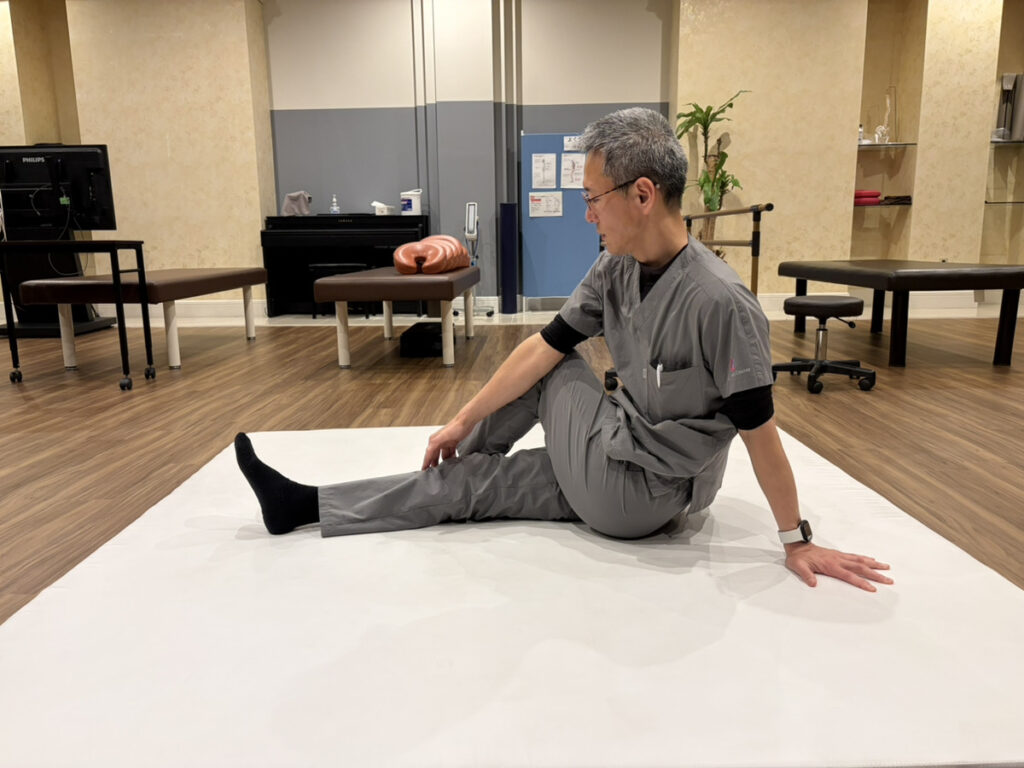
◎ Left-Right Tilt Type: Stretch of the Gluteus Medius
① Sit on the floor or a mat with your legs extended, then tilt your left leg outward
② Bend your right leg and hook it over your left knee
③ Wrap your left arm around your right leg and pull it toward your chest until you feel a deep stretch in the hip/glute area
④ Switch sides and repeat the sequence.
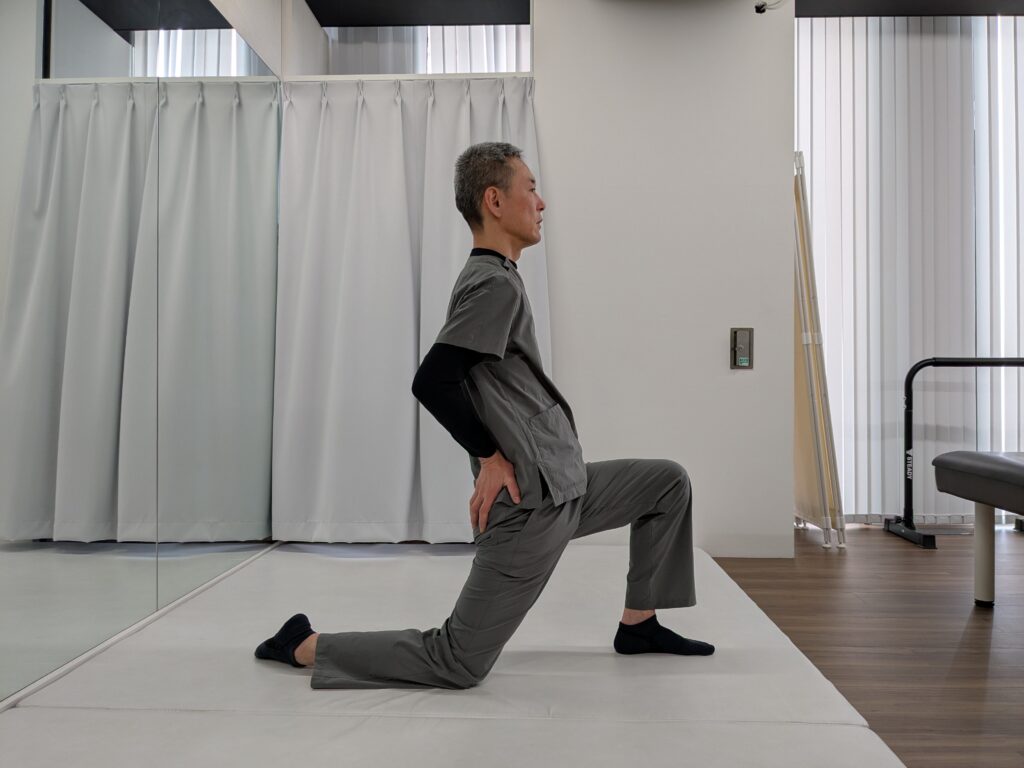
◎ Anterior Tilt Type: Iliopsoas (Hip Flexor) Stretch
① Kneel on one knee
② Shift your pelvic weight forward
③ Switch sides and repeat the sequence
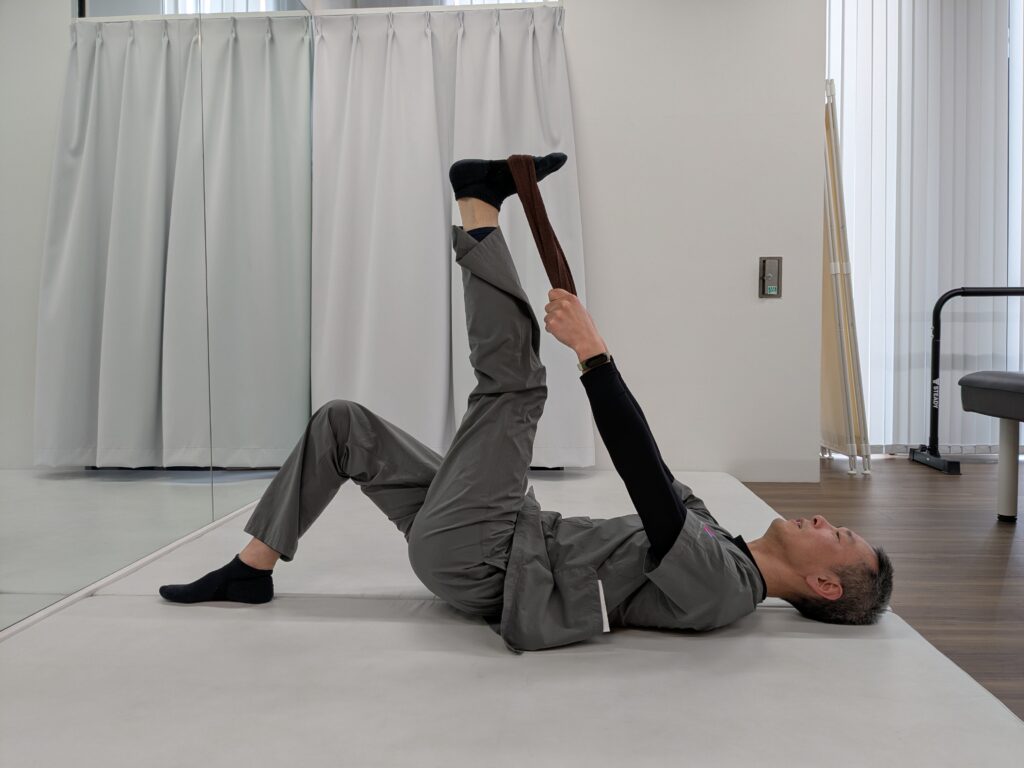
◎ Posterior Tilt Type: Hamstring Stretch
① Lie on your back
② Loop a long towel around the sole of one foot, holding the ends of the towel with both hands.
③ Slowly straighten your knee
④ Hold for about 1 minute
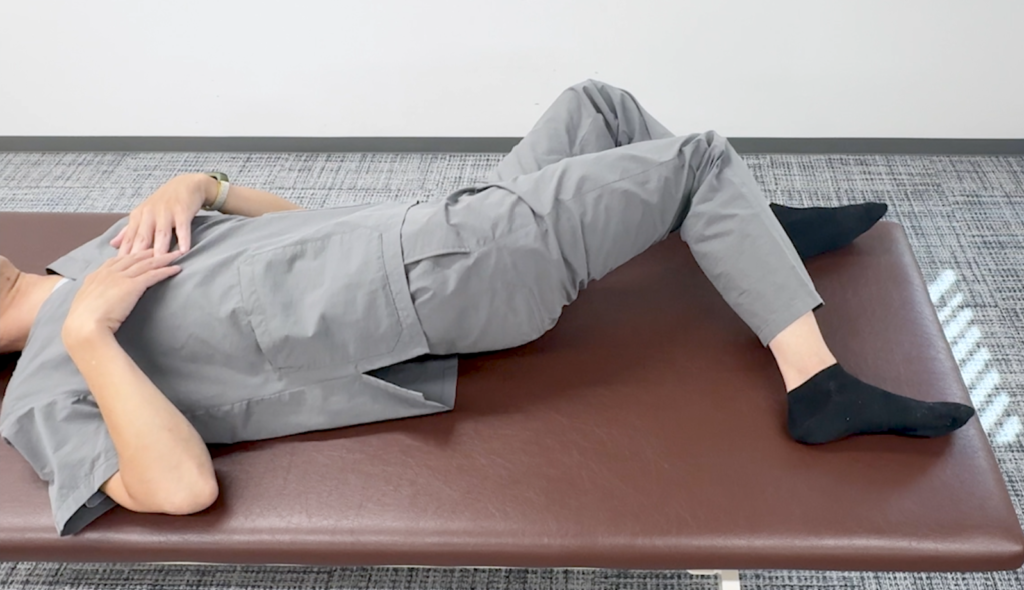
◎ Outflare Type: Hip Joint Internal Rotation Stretch
① Lie on the floor with one knee bent outward with your leg on the floor in a triangle shape
② Keeping your core stable, slowly lower your knees inward toward the floor one at a time, alternating sides to mobilize the pelvic structure
③ Perform 10 repetitions on each side (20 in total)
Treatments at Our Clinics
Our clinic provides advanced medical treatments targeting persistent lower back pain caused by structural damage to the intervertebral discs.
We specialize in the Cellgel Method, a minimally invasive procedure where a unique therapeutic agent is precisely injected into the micro-fissures and cracks of a damaged disc. Upon injection, the agent transforms into a cohesive gel implant that completely fills and seals the tears.
Because this specialized gel remains permanently inside the disc structure to support it from within, it preserves the natural disc volume and prevents further structural collapse—offering a fundamental treatment option for chronic discogenic pain.
Click Here to Learn More About the Cellgel Method
Additionally, in collaboration with the OJ Wellness Center, we incorporate approaches from Eastern medicine and Ayurvedic medicine to address various types of lower back pain across a wide range of age groups.
Click Here to Learn More About the OJ Wellness Center
If you are suffering from chronic lower back pain or postural instability, we encourage you to schedule a professional diagnostic evaluation at our clinic to explore your care options.
Related Articles
Lower Back Pain and Postural Improvement: Prevent Pain with The Correct Posture
What is Hyperlordosis? Causes, Self-Check Methods and Corrective Strategies for Postural Back Pain