





Column Sacroiliac Joint Dysfunction: What Is the Most Comfortable Sleeping Position When You Have This Medical Condition?
June 16, 2026
Sacroiliac (SI) joint pain refers to a condition where the connection between the sacrum (located at the very base of the spine) and the ilium (the hip bones on either side) become overly loose or stiff, causing dysfunction or inflammation due to excessive mechanical load.
In this article, we will discuss the best sleeping positions to adopt when suffering from sacroiliac joint dysfunction.
Symptoms and Causes of Sacroiliac Joint Dysfunction
The sacroiliac joint sits firmly between the sacrum and the ilium within the pelvis. It plays a critical role in supporting the weight of the upper body, coordinating movement with the lower limbs, and maintaining overall bodily balance.
When minute misalignments or inflammation occur in this joint due to working in a semi-crouching posture, external physical impacts, or childbirth, pain develops on one or both sides. This condition is known as sacroiliac joint dysfunction or sacroiliac sacroitis.
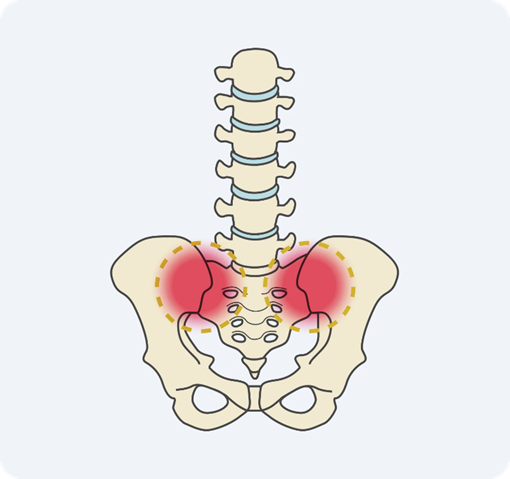
Key Symptoms of Sacroiliac Joint Dysfunction
The primary symptoms of sacroiliac joint dysfunction include lower back pain, buttock pain, and pain or numbness in the lower limbs.
The pain associated with sacroiliac joint dysfunction typically presents the following distinct characteristics:
・Pain when going up or down stairs
・Difficulty standing for prolonged periods
・Pain that intensifies when shifting weight onto a single leg
・Pain while running or taking long strides when walking
・Lower back pain at the start of walking that gradually eases over longer distances
・Inability to sit in a chair for extended periods
・Inability to sleep flat on one’s back
Primary Causes of Sacroiliac Joint Dysfunction
Sacroiliac joint dysfunction is triggered by an uneven load placed on the pelvis due to actions such as twisting the waist, opening the legs wide forward and backward, working in a semi-crouching posture, or experiencing physical trauma.
Individuals who habitually carry a heavy bag on the exact same shoulder or cross their legs while sitting face a significantly higher risk of developing this condition.
Furthermore, in women, the ligaments surrounding the sacroiliac joint naturally loosen during menstrual cycles or after childbirth, which can frequently lead to the onset of sacroiliac joint dysfunction.
Recent medical studies have also revealed that lumbar disc herniation is closely linked to the development of sacroiliac joint dysfunction. When lumbar disc herniation is further complicated by conditions such as spinal canal stenosis, sacroiliac joint dysfunction tends to progress and become significantly more severe. *2
*2: Zhixiang Huang, et al. Lumbar Disc Herniation is a Nonnegligible Factor for the Degeneration of Sacroiliac Joints. Pain Physician. 2021, 24(3).
Optimal Sleeping Positions if You Have Sacroiliac Joint Dysfunction
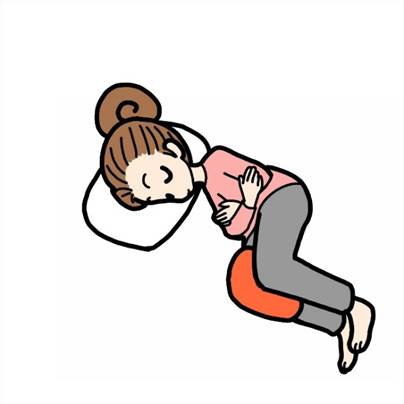
When Sleeping on Your Side
If you habitually sleep on your side, it is generally recommended to lie on the less painful side with your knees slightly bent. If both sides are painful, changing positions regularly throughout the night may help reduce discomfort.
To prevent the upper leg from dropping forward—which will cause the pelvis to twist and aggravate the joint, place a thick cushion or a body pillow between your knees to maintain proper alignment and height.
When Sleeping on Your Back
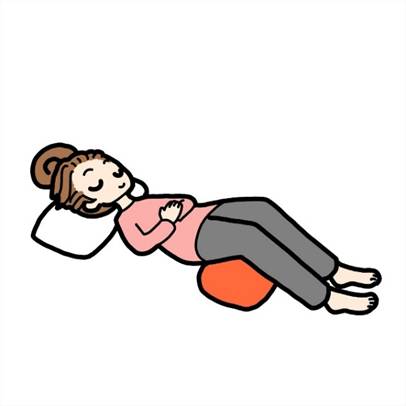
If you prefer sleeping on your back, place a pillow or rolled towel beneath your knees to keep them slightly bent. This position helps reduce stress on the lumbar spine and pelvis, making it more comfortable for many patients with SI joint dysfunction.
Additional Tips to Keep in Mind
Sleeping on your stomach is not recommended, as it places excessive twisting stress on both the pelvis and lower back, potentially aggravating the sacroiliac joint.
If you have been diagnosed with sacroiliac joint dysfunction or are experiencing persistent low back pain, we encourage you to consider an evaluation at our clinics.
Related Articles
Sacroiliac joint pain, differences with other back and joint pain, causes, and possible treatments.