





January 30, 2026
Spondylolisthesis is a condition that occurs not only in older adults but also frequently in adolescents.
In this article, we will explain the specifics of spondylolisthesis that occur during the growth phase.
What is Juvenile Spondylolisthesis?
In children, this condition most commonly takes the form of Spondylolytic Spondylolisthesis. It occurs when the posterior part of a vertebra separates—often due to incomplete bone growth during childhood or a stress fracture caused by repetitive impact or accidents during sports. This separation allows the vertebral body to slip forward.
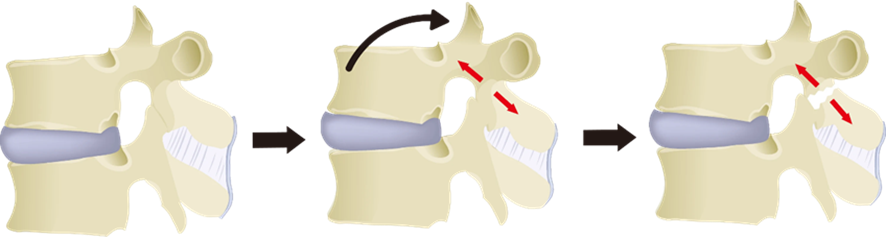
Symptoms of Juvenile Spondylolisthesis
The primary symptoms include pain when arching the back and chronic pain around the beltline area. As the crack in the lumbar spine is irritated by bending or twisting, chronic back pain often begins to surface between the ages of 10 and 15.
If the separated area compresses a nerve, numbness or sharp pain may radiate through the buttocks, the back of the thighs, and the calves.
Symptoms are often exacerbated during exercise, or when standing or walking for long periods.
In advanced stages, a child may experience weakness in the ankles or toes, leading to frequent tripping.
Early-stage symptoms are often mistaken for temporary sports-related back pain. However, if back pain persists, evaluation by an orthopedic specialist is recommended.
Treatment for Juvenile Spondylolisthesis
Conservative Therapy (First-Line Approach)
The primary approach for juvenile spondylolisthesis involves wearing a brace, taking pain medication, and physical therapy.
During the rest period, activities that place excessive stress on the lower back—such as competitive sports or prolonged physical exertion—should be avoided. Using a brace to stabilize the lumbar spine and reduce strain is also crucial.
To alleviate pain, medications such as anti-inflammatory analgesics, nonsteroidal anti-inflammatory drugs (NSAIDs), and vasodilators that improve nerve blood flow may be prescribed. For severe pain, epidural blocks or nerve root block injections may also be administered.
Furthermore, depending on the level of pain and progression of slippage, it is crucial to engage in exercise therapy and physical therapy. This includes strengthening the core muscles (especially the abdominals and back muscles), learning proper posture, and performing stretches for stiffened lower limbs.
Learning proper posture and strengthening core muscles can reduce strain on the lower back.
Surgical Intervention
If conservative treatment shows no improvement after several months, or if there is severe pain, numbness, leg paralysis, or urinary dysfunction, surgical intervention may be considered. If the bones still have a high potential for healing, a fusion procedure (surgery to fix the separated section with metal screws, hooks, rods, etc., aiming for bone reunion) may be performed. Additionally, decompression surgery to relieve nerve pressure or lumbar fusion surgery to stabilize the bones with screws may also be performed.
How Can Parents Deal With Juvenile Spondylolisthesis?
When a child is diagnosed with spondylolisthesis, it is natural for parents to feel anxious.
However, the first step is to monitor your child’s daily habits.
Manage their weight to reduce strain on the lower back. Encourage them to avoid bending forward and excessive arching of the lower back.
Even if symptoms improve, avoid self-judgment. Proper evaluation and ongoing follow-up under the guidance of a specialist are essential to determine the appropriate treatment strategy.
If you are concerned about your child’s back pain, please consider a consultation at our clinic.
We also offer specialized rehabilitation tailored specifically for spinal health.
OJ Wellness Center (Specialized Back Pain Rehab)
Related Articles
🛌How to Sleep Comfortably When You’ve Been Diagnosed with Spondylolysis and Spondylolisthesis?🛌