





Column The Relationship Between Low Back Pain and Pelvic Floor Muscles: Strengthening Your Core to Help Prevent Lower Back Pain
July 24, 2026
Weakness of the pelvic floor muscles can be one of the contributing factors to lower back pain.
In this article, we explain the relationship between the pelvic floor muscles and lower back pain.
The Role of the Pelvic Floor Muscles
The pelvic floor muscles are a group of muscles that spread across the bottom of the pelvis in a hammock-like structure.
They play three major roles: supporting internal organs, controlling excretion, and stabilizing the core. Strengthening these muscles can help prevent urinary incontinence and improve posture.

Supporting the Internal Organs
The pelvic floor muscles support the pelvic organs, including the bladder, uterus, and intestines, from below and help keep them in their proper positions.
Controlling Excretion
By contracting and relaxing the muscles around the urethra, anus, and vagina, the pelvic floor muscles help prevent urinary and fecal incontinence.
Stabilizing the Trunk
The pelvic floor muscles work together with the diaphragm and transversus abdominis muscle, functioning as important deep core muscles that help maintain proper posture.
The Relationship Between the Pelvic Floor Muscles and Lower Back Pain
When the pelvic floor muscles become slack, the core and pelvis become unstable, making it difficult to maintain intra-abdominal pressure. As a result, the back muscles overcompensate, leading to chronic low back pain.
The pelvic floor muscles form an important foundation that supports the pelvic organs. When they become weak, the pelvis may tilt more easily forward or backward, increasing stress and rotational forces on the lumbar spine. This can contribute to lower back pain.
Additionally, weakened pelvic floor muscles make it hard to sustain intra-abdominal pressure, diminishing the support for the spine. This also contributes to low back pain.
The pelvic floor muscles are linked to other inner core muscles: the transversus abdominis deep in the abdomen, the multifidus in the back, and the diaphragm. Reduced function in the pelvic floor muscles disrupts this coordination, causing excessive fatigue to accumulate in the muscles surrounding the lower back, resulting in pain.
Preventing Lower Back Pain Through Pelvic Floor Muscle Training
Pelvic floor muscle exercises can strengthen the deep muscles of the trunk and increase intra-abdominal pressure, helping support the lower back from within. This may also contribute to improving lower back pain.
When exercising, be careful not to strain excessively or hold your breath. Excessive tension in the buttocks or thighs can also place additional stress on the lower back.
Basic Exercise For Pelvic Floor Muscles
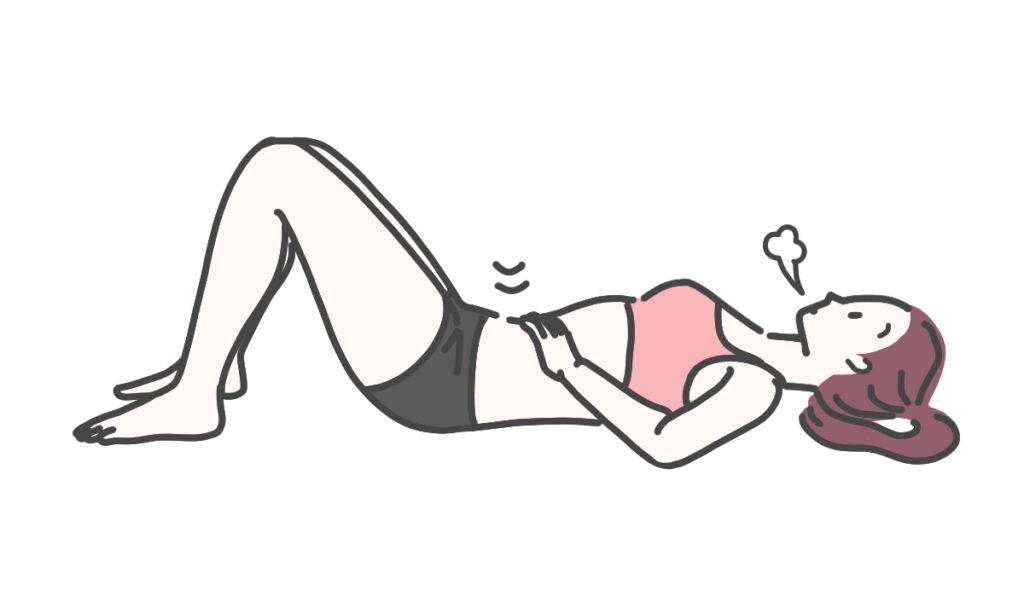
1. Lie on your back with your knees comfortably bent and your feet at approximately the same width as your shoulders.
2. As you exhale, gently contract your pelvic floor muscles, as if pulling the urethra and anus upward toward your navel.
3. Hold the contraction for approximately 5 seconds, then slowly relax completely while inhaling.
Repeat 5–10 times.
Perform the exercise in a relaxed manner.
The Bridge Pose
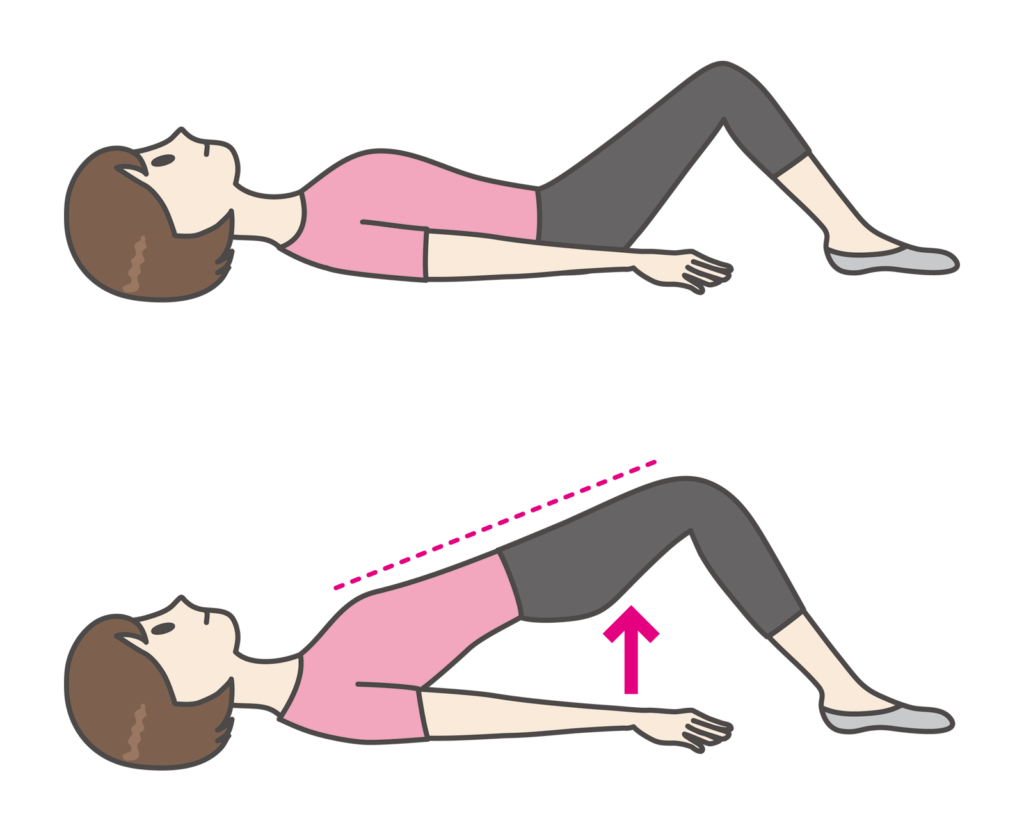
Adding bridge exercises can further improve trunk stability by strengthening the multifidus muscles around the spine and the gluteal muscles.
1. Lie on your back with your knees bent and the soles of your feet flat on the floor.
2. As you exhale, tighten your lower abdomen and pelvic floor muscles while slowly lifting your hips.
3. Hold for 3 to 5 seconds at a height where your body forms a straight line from shoulders to knees.
4. As you inhale, slowly lower your back onto the floor, imagining each vertebra touching down one by one from the top downward.
Repeat approximately 5 times.
Treatment at Our Clinics
For those suffering from persistent low back pain, fundamental treatment may be necessary.
Our clinic offers the Cellgel Method, a procedure designed to repair damaged intervertebral discs.
With the Cellgel Method, a medical agent is injected to fill in the cracks in the intervertebral disc. The agent then turns into a gel-like implant to seal and reinforce the damaged areas, providing a fundamental treatment. Because the volume of the intervertebral disc is not reduced and the gel remains inside the disc after treatment, the natural structure of the disc is preserved.
Learn more About the Cellgel Method
Additionally, at the OJ Wellness Center, we offer specialized low back pain rehabilitation incorporating approaches from Eastern Medicine and Ayurvedic Medicine.
Learn more About the OJ Wellness Center
If you are struggling with low back pain, please consider visiting our clinic for a consultation.
Related Articles
Are Hot Springs Really That Good For Back Pain? The Effects and Benefits of Hot Spring Spas
Lower Back Pain Specific to Women: How Menstruation, Pregnancy, and Childbirth Can Cause Back Pain