





Column Is Your Back Pain Caused by the Cold? 3 Warming Strategies to Relieve Winter Back Pain
February 27, 2026
Back pain can often be triggered by internal chilling or coldness.
In this article, we will explain how cold temperatures affect the lower back and provide methods to alleviate discomfort during the colder months.
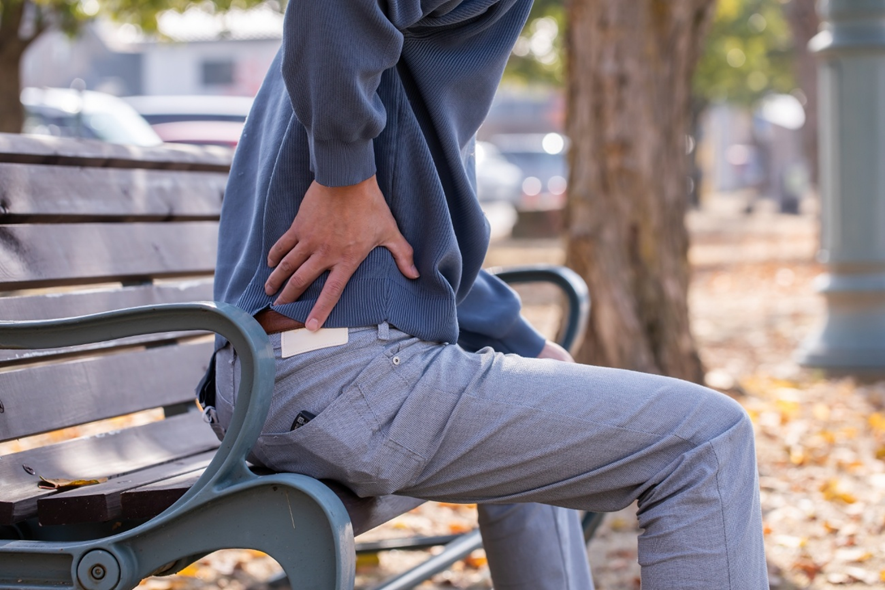
Cold as a Cause for Back Pain
During the cold winter months, exposure to cold may cause blood vessels to constrict. This leads to poor circulation, which in turn causes the muscles in the lower back to become stiff and fatigued. This vicious cycle often results in chronic heaviness or pain. It is quite common for coldness around the lower back and buttocks to be the underlying trigger for acute back strain.
Factors Contributing to Cold-Induced Pain
Cold temperatures can reduce blood circulation, preventing sufficient oxygen and nutrients from reaching the muscles around the lower back, which causes them to stiffen and tense up.
Waste products and fatigue-inducing substances accumulate in these stiffened muscles, leading to lower back pain and a feeling of heaviness.
Being cold often causes people to hunch their backs or shrug their shoulders, but these postures tend to place strain on the lumbar spine and can exacerbate pain.
Characteristics of Cold-Induced Back Pain
A key sign that your pain is cold-related is if it intensifies in low temperatures but eases after taking a warm bath or exercising.
Additionally, when cold is the cause, the pain often occurs in the morning or when moving after sitting for a long time.
Lower back pain caused by cold may also be accompanied by cold hands and feet or poor digestive function.
How to Manage Cold-Induced Back Pain
To alleviate pain caused by the cold, the key is to warm the body from the core.
1. Baths and Heat Packs
Soak in a lukewarm bath (approximately 38–40°C) to gradually warm the entire body.
Additionally, applying a disposable heat pack (Kairo) over the sacrum (the triangular bone at the base of the spine) is highly effective for promoting circulation in the pelvic area.
2. Acupressure (Tsubo Therapy)
Stimulating specific pressure points can promote blood flow and help prevent pain.
Using your fingers, apply gentle pressure while exhaling for about 3 seconds, then release as you inhale.
Repeat this 3 times, ideally when relaxed after a bath or before bed.
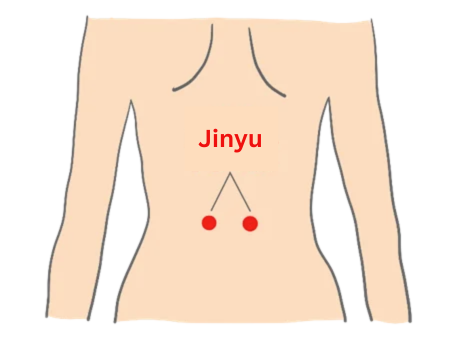
◎ Jinyu (BL23): Located at the waistline, about two finger-widths outward from the spine on both sides.
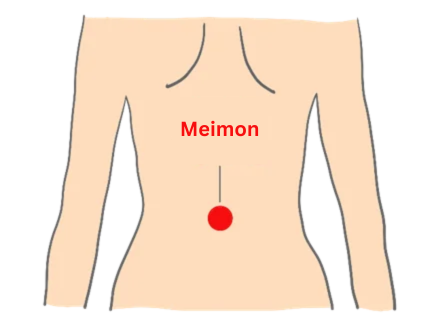
◎ Meimon (GV4): Located on the spine, directly between the two Jinyu points (directly behind the navel).
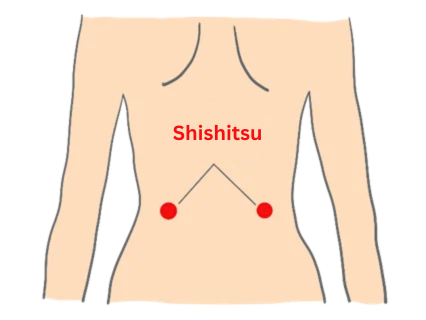
◎ Shishitsu (BL52): Located another two finger-widths further out laterally from the Jinyu points.
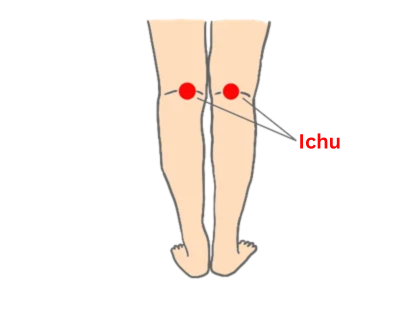
◎ Ichu (BL40): Located exactly in the center of the crease at the back of the knee.
3. Stretching
It is recommended to stretch your lower back, buttocks, and thighs to promote blood circulation.
4. Diet & Clothing
Consume foods that warm the body from the inside, such as hot soups and root vegetables (ginger, carrots, etc.).
Use a belly warmer or thick thermal undershirts to keep the abdomen covered and wear thick socks to prevent cold from rising from the feet.
Note: If pain does not improve after 1–2 weeks, or if the pain is too severe, please consult an orthopedic specialist without delay.
Treatment at Our Clinics: The Cellgel Method
While warming care is excellent for temporary relief and prevention, some patients with chronic issues may require fundamental treatment for their underlying conditions.
Our clinic offers the Cellgel Method, a unique therapy which repairs damaged intervertebral discs.
During this procedure, a specialized agent is injected into the cracks of the disc. This agent turns into a gel that fills and patches the damage, providing a root-cause solution. A primary feature of this method is that it preserves the disc; the agent remains as a permanent gel implant, ensuring that disc volume does not decrease, and its cushioning function is maintained in the process.
Click here to learn more about the Cellgel Method
If you are concerned about persistent back pain, we encourage you to schedule a consultation at our clinic.
Related Articles
Differences Between Western and Eastern Medicine in Relation to Low Back Pain
If You Led This Kind of Lifestyle as a Youth, You Have a Time Bomb Ticking in Your Lower Back!
Back Pain and Diet: Reducing Pain through a Balanced Nutritional Program
The Relationship Between Stress and Back Pain: How to Maintain Good Mental and Physical Health
Lower Back Pain and Postural Improvement: Prevent Pain with The Correct Posture
Why Does Lack of Exercise Cause Back Pain? Introducing Mechanisms and Simple Exercises