





Column A Specialist Explains to Patients Struggling with Chronic Low Back Pain Why It Won’t Heal by Itself
April 3, 2026
It is estimated that approximately 30 million people in Japan suffer from back pain.
Back pain is generally classified into two broad categories: acute and chronic.
Acute low back pain refers to pain that subsides within four weeks after onset. Symptoms include sudden and intense pain in the lower back, with the most well-known example being acute lumbar sprain (strained back).
Chronic low back pain, on the other hand, tends to develop gradually over a long period of time due to the accumulation of daily strain on the lower back. Muscles become tense, stiff, and tight, resulting in a dull, heavy pain that persists continuously.
In this article, we will take a closer look at chronic back pain.
What is Chronic Back Pain?
Chronic back pain is frequently accompanied by intervertebral disc degeneration.
The intervertebral discs located between the lumbar vertebrae gradually lose their normal structure due to aging and continuous stress. As the discs deform, their function deteriorates, leading to symptoms such as pain. This condition is called degenerative disc disease.
When disc degeneration progresses, cracks can form in the disc, allowing the nucleus pulposus inside to leak out and cause inflammation. This condition is known as disc herniation, which can lead not only to low back pain but also to pain and numbness in the buttocks and legs.
In addition, degeneration and deterioration of the discs can reduce spinal stability. As a result, bone spurs may form to support the lower back, potentially compressing the spinal canal and causing symptoms of spinal canal stenosis, such as intermittent claudication.
In short, the aging and degeneration of the discs are the starting point for various types of back pain.
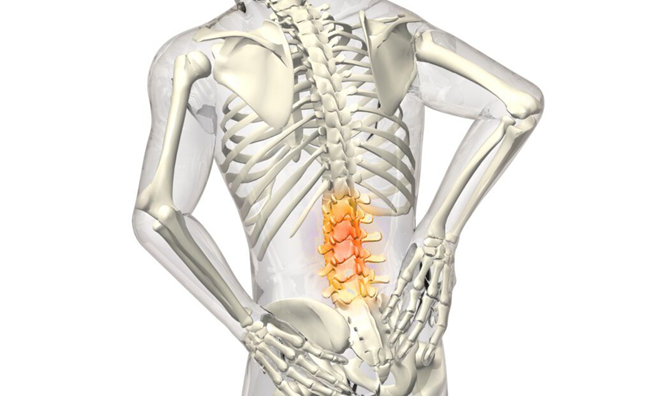
Why Does Chronic Back Pain Tend to Persist?
Chronic low back pain is defined as pain lasting longer than three months and tends to persist over time.
The main reasons chronic low back pain becomes prolonged involve both physical and psychological factors.
Physical Factors
Conditions such as lumbar disc herniation, lumbar spinal canal stenosis, and lumbar spondylosis are common causes of chronic low back pain. When discs degenerate and bones become deformed, nerves may become irritated or compressed. The longer nerve compression continues, the longer the pain tends to persist.
Muscle stiffness is also closely related to chronic low back pain. Maintaining the same posture for long periods or using improper posture can cause the muscles around the lower back to become tight, forming trigger points that serve as sources of pain and reduce blood circulation. When poor circulation continues, the pain can become chronic.
Weakness of the core muscles, including the abdominal and back muscles, can also increase stress on the lumbar spine. Poor posture, such as a rounded back or excessive lumbar arching, may become permanent over time, further contributing to persistent pain.
Psychological Factors
Stress and anxiety from work or daily life can stimulate the sympathetic nervous system, causing blood vessels to constrict and promoting muscle tension. This can make the body more sensitive to pain, causing symptoms to last longer.
Once pain develops, many people tend to avoid movement and remain at rest. However, fearing pain and avoiding activity can further stiffen the muscles, reduce flexibility, and contribute to chronic pain.
Even after physical causes have improved, the brain may continue to mistakenly interpret that “the lower back still hurts” and keep sending pain signals.
Improving Chronic Back Pain
The Importance of Fundamental Treatment
To improve chronic back pain, it is first necessary to remove the source of nerve compression. It is crucial to be examined by a specialist at a medical institution to receive appropriate treatment.
Early intervention can break the “vicious cycle of pain,” prevent serious underlying diseases from being overlooked, and improve your Quality of Life (QOL).
Reviewing Lifestyle Habits
Since psychological factors play a role, lifestyle changes are equally important. Be mindful of your posture and avoid staying in the same position for too long. Aerobic exercises like walking (approx. 30 minutes, twice a week) and stretching are highly effective for promoting blood circulation.
Our Clinics’ Treatment
For persistent pain, fundamental treatment to repair the damaged disc may be required.
At our clinics, we provide a treatment called the Cellgel Method, which is designed to repair damaged intervertebral discs.
In the Cellgel Method, we inject a specialized agent into the cracks of the intervertebral disc. This agent solidifies into a gel to seal and repair the fissures, providing a fundamental solution. A unique feature of this treatment is that it preserves the disc; it does not reduce disc volume, and the medication remains as a gel-like implant to support the disc’s function.
Click here to learn more about the Cellgel Method
Our clinic also provides rehabilitation specialized for low back pain.
Click here to learn more about the OJ Wellness Center
If you are struggling with low back pain, please consider scheduling a consultation at our clinic.
Related Articles
How to Treat Chronic Low Back Pain: Find the Right Treatment for Your Condition.
How to Address Chronic Back Pain: Does that Type of Pain Require Surgery or not?