





Column Disc Herniation vs. Spinal Canal Stenosis: What’s the Difference? (an Illustrated Guide)
September 4, 2026
There are many conditions that can cause lower back pain, and among them, disc herniation and spinal canal stenosis are two conditions that are often confused with one another.
In this article, we explain the differences between disc herniation and spinal canal stenosis.

The Difference Between Disc Herniation and Spinal Canal Stenosis
Both disc herniation and spinal canal stenosis are conditions in which nerves are compressed, causing pain and numbness in the lower back and legs.
What Is Disc Herniation?
A condition in which a crack forms in the annulus fibrosus (the outer part of the intervertebral disc) and the nucleus pulposus protrudes outward is called disc herniation.

Everyday activities and physical labor can place strain on the disc, causing cracks in the annulus fibrosus, allowing the inner nucleus pulposus to protrude outward, resulting in herniation. If the herniation protrudes toward the spinal canal, which is the passageway for the nerves, spinal canal stenosis may also occur.

Lumbar disc herniation causes low back pain, and pain and numbness in the buttocks and legs. Pain and numbness can appear anywhere in the lower body, but pain from the buttocks to the back of the thigh, known as sciatica, is a typical symptom of lumbar herniation.

The spine may curve to the side and become harder to move, and pain may become stronger when lifting heavy objects. Symptoms may appear suddenly or develop gradually.
If the nerves are compressed very severely, symptoms such as difficulty urinating or passing stool, or incontinence, may occur.
What Is Spinal Canal Stenosis?
Spinal canal stenosis is a condition in which the spinal canal, the passageway for the nerves, becomes narrow, compressing the nerves. When the cause is instability of the lumbar spine, pain often occurs with body movement.

As mentioned above, disc herniation is one of the causes of spinal canal stenosis.
When the nucleus pulposus protrudes through a tear in the disc, the disc gradually loses its normal function. This increases the load placed on the spine, potentially leading to deformities of the vertebrae and ligaments. This deformation of the vertebral bodies, as well as thickening of the ligamentum flavum, which stabilizes the spine, can also cause spinal canal stenosis.
When the spinal canal narrows, symptoms such as pain, numbness, and weakness may occur in the lower back and legs.
A characteristic symptom of spinal canal stenosis is intermittent claudication. While walking, the legs may become numb or weak to the point that walking becomes difficult or impossible. However, after squatting or sitting down and resting briefly, the person may be able to walk again. As the stenosis progresses, the distance a person can walk without resting tends to decrease. Difficulty walking may be accompanied by leg weakness and reduced muscle strength, indicating further deterioration of the condition.

If spinal canal stenosis progresses, leg strength may decline, a hot sensation may occur around the anus, urination may become difficult, or, conversely, urinary incontinence may occur.
Comparison Between Disc Herniation and Spinal Canal Stenosis
| Disc Herniation | Spinal Canal Stenosis | |
| Main cause | The nucleus pulposus protrudes from the disc and compresses the nerve | The spinal canal is compressed by disc herniation, vertebral deformation, or ligament thickening |
| Common age group | 20s to 40s | 50s to 60s |
| Characteristic symptom | Sciatica | Intermittent claudication |
| Area of symptoms | Often affects one side only | May affect one or both sides |
| Position that brings relief | Keeping the back straight | Bending forward |
Self-Check: How to Tell the Difference Between Disc Herniation and Spinal Canal Stenosis
Both disc herniation and spinal canal stenosis cause low back pain and pain and numbness in the legs, but since the characteristics of the symptoms differ, it can provide useful clues for telling the conditions apart.
| Symptom | Disc Herniation | Spinal Canal Stenosis |
| Lower back pain | ・Sharp pain ・Pain gets worse with coughing or sneezing ・Pain gets worse when bending forward | ・Gradual, dull pain ・Pain gets worse when arching the back ・Pain gets worse when standing for long periods |
| Symptoms on the lower-limbs | ・Pain and numbness in one leg ・Symptoms from the lower back to the toes ・Electric shock-like pain | ・Pain or numbness in one or both legs ・Symptoms from the buttocks to the calf ・Symptoms ease when bending forward |
| Difficulty walking | May occur when symptoms are severe | Intermittent claudication is a characteristic symptom |
Treatments Available at Our Clinics
Our clinic offers the Cellgel Method, the Florence Method, and the Q Florence Method.
The Cellgel Method
The Cellgel Method involves injecting a therapeutic agent into the cracks in the intervertebral disc. The substance then forms a gel-like implant that fills and reinforces the damaged areas. This may help prevent further disc degeneration and may serve as a fundamental treatment approach that addresses the underlying disc damage.
Unlike procedures that reduce the volume of the intervertebral disc, the Cellgel Method leaves a gel-like implant within the disc after treatment, helping preserve the disc’s volume and structure.
Click here to learn more about the Cellgel Method
The Florence Method and Q Florence Method
The Florence Method and Q Florence Method are minimally invasive treatments designed for spinal canal stenosis, with the aim of reducing treatment-related risks.
Under local anesthesia and sedation, a device is inserted percutaneously to widen the narrowed spinal canal. The device can also be removed after treatment if necessary.
By inserting the device, the stability of the vertebrae is improved while the rotation and flexion of the spine are maintained. The spinal canal is widened, disc protrusion is restrained, and thickening of the ligamentum flavum can be reduced. As the narrowed spinal canal widens, the pain is relieved.
These treatments may be considered for patients whose symptoms have not improved with conservative treatment, and who wish to avoid major surgery such as spinal fusion, which is performed under general anesthesia.
Click here to learn more about the Florence Method
Click here to learn more about the Q Florence Method (article in Japanese)
In addition, our affiliated OJ Wellness Center incorporates approaches from traditional East Asian medicine and Ayurvedic medicine to support people experiencing various forms of lower back pain across a wide range of age groups.
Click here to learn more about the OJ Wellness Center
If you are experiencing lower back pain, please consider scheduling a consultation at our clinic.
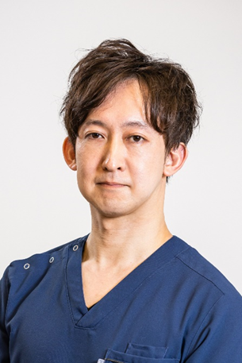
Supervising Physician
Dr. Tadaaki MINOWA
Administrative Director at ILC Tokyo
Affiliations / Certifications
- Japan Low Back Pain Association
- Japan Society of Endoscopic Surgery
- Certified Industrial Physician, Japan Medical Association
- Cellgel Treatment Method Certified Doctor
- Florence Method Certified Doctor
- Q-Florence Method Certified Doctor
- Ozone Treatment Certified Doctor
Related Articles
The Structure of the Spine and the Different Types of Disorders Related to it: Which One Is Causing Your Symptoms?
The Different Symptoms of Spinal Canal Stenosis: If You Have Any of These, it’s a Red Flag!
Understanding Disc Herniation and Receiving the Most Appropriate Treatment For It
Diagnosis and Treatment of Spinal Stenosis: Why Early Detection is Critical
Advantages and Disadvantages of Disc Herniation Disc Surgery. How to Avoid Risks and go Into Treatment With Peace of Mind