





February 6, 2026
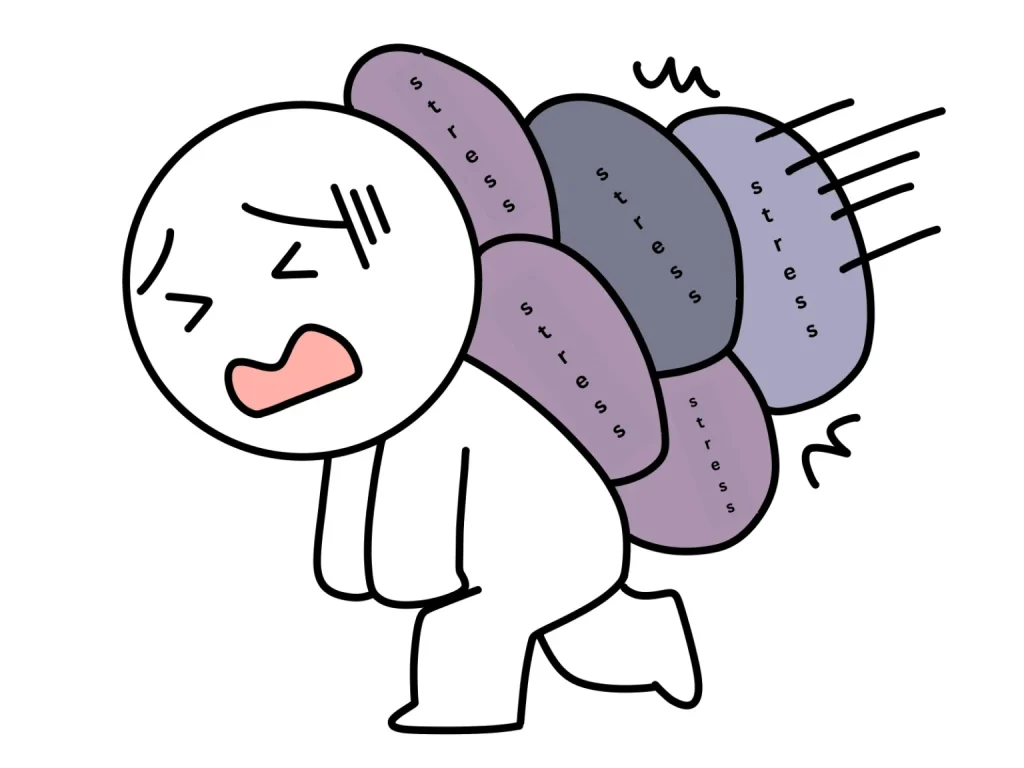
At first glance, lumbar disc herniation and stress may seem unrelated, but are in fact closely connected.
In this article, we will explain the relationship between lumbar disc herniation and stress.
What Is Lumbar Disc Herniation?
Between each vertebra in your spine sits an intervertebral disc. This disc is made of a gelatinous center (the nucleus pulposus) surrounded by a tough, collagen-rich outer layer (the annulus fibrosus).
Disc herniation occurs when a tear in the annulus fibrosus allows the gel center to protrude and leak out.
In the case of lumbar disc herniation, symptoms include lower back pain as well as pain and numbness in the buttocks and legs. Pain and numbness may occur anywhere in the lower body, but pain radiating from the buttocks down the back of the thigh—commonly known as sciatica—is a typical symptom.
The Mechanism: How Stress Amplifies Pain
While stress cannot physically cause disc herniation directly, it can significantly intensify herniation-related pain and contribute to chronic pain.
The Relationship Between Stress and Pain
Stress affects brain function, and as a result, various physical symptoms—including lower back discomfort—may appear (*1).
(*1): Anne-Katrin Puschmann, et al. Stress and Self-Efficacy as Long-Term Predictors for Chronic Low Back Pain: A Prospective Longitudinal Study. Journal of Pain Research. 13, 2020. Sungwoo Choi, et al. Association between chronic low back pain and degree of stress: a nationwide cross-sectional study. Scientific Reports. 11(1), 2021.
Stress triggers the sympathetic nervous system, which in turn causes muscles to tighten and blood vessels to constrict. Reduced blood flow prevents the area from healing and leads to pain caused by lack of oxygen and nutrients in the tissues.
The stronger the stress, the more your body stiffens as a defensive response, often leading to lower back pain.
Chronic stress can also disrupt dopamine pathways in the brain, reducing its ability to suppress pain and making it chronic.
While stress can initially cause back pain, in turn persistent back pain itself becomes a new source of stress, creating a vicious cycle.
What is Psychogenic Low Back Pain?
Even when imaging tests show disc herniation, the actual cause of pain may not be herniation but stress. This condition is referred to as psychogenic low back pain.
The main causes of stress often stems from relationships at home or work.
The characteristics of psychogenic back pain include:
 No abnormalities apparent on the MRI images
Even though herniation is visible on MRI, the location does not match the area of symptoms
Pain severity or location varies from day to day
Pain is present even when at rest
Pain persists even with pain medication
Management Measures for Psychogenic Low Back Pain
Coping strategies for psychogenic low back pain include stress reduction, physical activity, and changing one’s perception of pain.
Stress Reduction
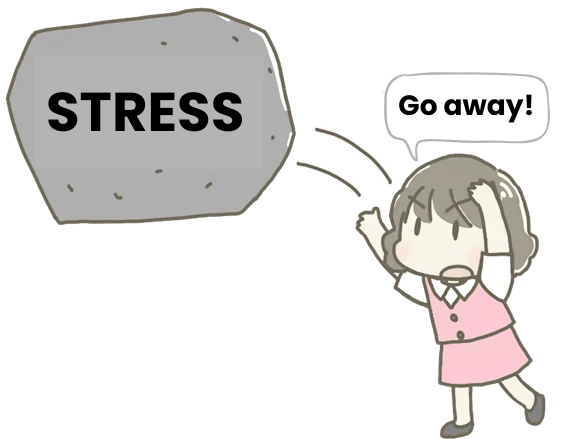
Since stress is the main cause of psychogenic low back pain, relieving stress and refreshing yourself is crucial.
Make a conscious effort to rest and engage in activities you enjoy to release stress.
Avoid internalizing stress—consider psychosomatic medicine or counseling for psychological support.
Physical Activity
Incorporating light exercise such as walking, jogging, or yoga improves circulation, relieves stress, and reduces lower back pain.
Excessive rest—such as avoiding moving until the back heals—can be counterproductive. Instead, develop a habit of moderate exercise within a tolerable range.

Changing One’s Perspective on Pain
Pessimistic thoughts such as “this will never heal” can create additional stress and exacerbate pain. Avoid overfocusing on the pain or fearing it too much.
Our Clinic’s Treatment
At our clinic, we offer the Cellgel Method, a fundamental treatment to disc herniation.
Unlike traditional surgery that removes disc material (thus reducing its volume), the Cellgel Method involves injecting a specialized therapeutic agent that repairs the cracks in the disc. Once injected, the liquid turns into a gel-like implant, preserving the disc’s volume and preventing further leakage. The disc volume is maintained, and the gel remains as an implant within the disc, helping maintain disc integrity.
Click here to learn more about the Cellgel Method
If you have been diagnosed with lumbar disc herniation or are suffering from lower back pain, we encourage you to consider a consultation at our clinic.
Related Articles
Understanding Disc Herniation and Receiving the Most Appropriate Treatment For It
What is Lumbar Disc Herniation? Causes of Pain and Symptoms
Various Treatments for Lumbar Disc Herniation: Respective Differences and Results of Each Method
Is Disc Herniation for Teens and Young Adults on The Rise?
Symptoms and Treatments of Disc Herniation: When Early Detection is Key