





Column Why Does My Back Hurt in the Morning? Causes and Daily Fixes You Can Start Right Away
February 20, 2026
Waking up with a stiff or painful back can ruin your mood before the day has even begun.
Let’s look at why this happens and what you can do to improve it.

The Causes of Morning Back Pain
Most morning back pain usually stems from sleeping posture, issues with your bedding, or insufficient movement during the night.
Sleeping Posture
In many cases, morning back pain is related to one’s sleeping position.
Sleeping on your back generally distributes body pressure evenly and makes turning over easier. However, if you sleep with your legs fully extended, the lower back may become overly arched, increasing lumbar strain and potentially leading to pain.
Sleeping on your side often lead to asymmetry. The legs and arms may twist, resulting in uneven spinal alignment and increased lumbar stress.
Sleeping prone increases lumbar extension (arching), placing significant stress on the lower back and potentially contributing to spinal misalignment. Excessive lumbar extension can trigger or worsen back pain.
Reduced Body Movement During Sleep
Tossing and turning during sleep helps maintain blood circulation and relieve muscle tension.
If your bedding is inadequate or fatigue has accumulated over time, reduced movement may occur, causing your muscles to stiffen by morning, and resulting in pain in the morning.
Bedding Issues
Mattresses that are too soft allow the hips to sink in too much like in a hammock, distorting the spine, while mattresses that are too firm create a gap between the mattress and your lower back, leaving it unsupported. Both situations increase spinal stress.
Additionally, bedding that is too thin provides reduced cushioning, and this may fail to provide adequate support and contribute to back pain instead.
How to Reduce Morning Lower Back Pain
Posture Hacks When Sleeping
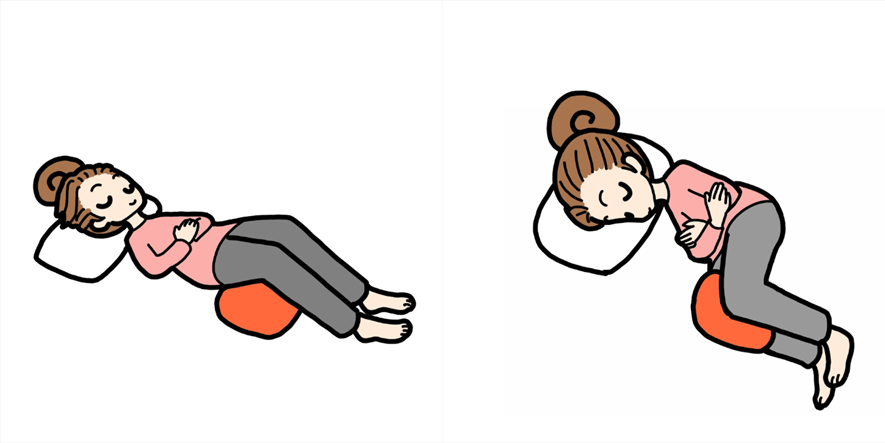
If you sleep on your back, elevate your legs to reduce lumbar strain: place a rolled towel or blanket under your knees so they are bent at approximately 90 degrees. This reduces lumbar lordosis and relieves pressure.
If you sleep on your side, bend both knees: placing a cushion between your knees helps align the pelvis and maintain spinal neutrality. Slightly curling the body into a relaxed position may further reduce discomfort.
Because of the increased lumbar extension and mechanical stress that it induces, sleeping on your stomach should be avoided.
Choose Appropriate Bedding
A firm, high-resilience mattress will prevent your body from sinking in, support your back, and reduce strain on your lower back during sleep. Also, avoid overly thin futons or mattresses that may put extra strain on your back and opt for thicker options instead.
If your body becomes cold during sleep, you may curl up unconsciously, increasing lumbar strain. Therefore, prioritize bedding made from heat-retentive natural materials such as cotton to maintain warmth and prevent your muscles from tensing up due to the cold.
Simple Stretches to Do Before Bedtime
Performing light stretching before sleep may help prevent morning back pain.
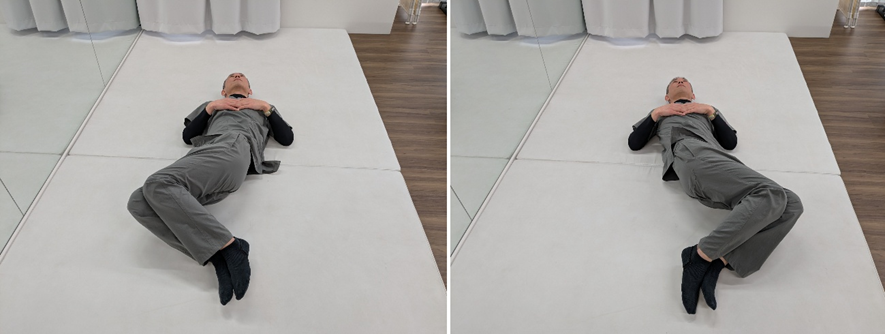
① Waist Twists
1. Lie on your back with knees bent.
2. Slowly lower both knees to the right, then to the left.
* Move slowly while exhaling, taking your time.
Repeat for approximately one minute.
② Knee Hugs
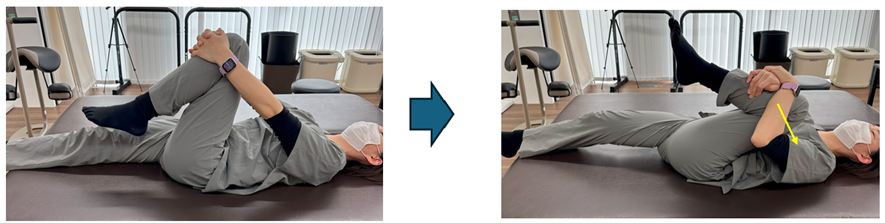
Hug your right knee to your chest while extending your left leg. This stretches the iliopsoas muscle on the left front side of your pelvis.
1. Lie on your back. While exhaling, bring one knee toward your chest and hold it gently.
2. Hold the position for about 15 seconds while breathing normally.
3. Return the knee to the floor and lie flat on your back.
4. Repeat with the opposite leg.
③ Towel Hamstring Stretch
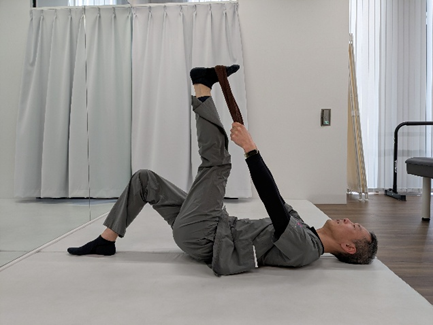
1. Lie on your back with knees bent.
2. Hold both ends of a towel and loop it around the sole of one foot.
3. Keeping your back on the floor, extend the leg upward to approximately a 60-degree angle.
4. Exhale and hold for 10 seconds.
5. Repeat with the opposite leg.
* Adjust the towel length to ensure you feel a moderate stretch in the back of your calves and thighs.
Our Clinic’s Treatment
If lower back pain occurs, it is important not to ignore it. Early evaluation by a specialist can prevent aggravation and may allow for complete recovery with the appropriate treatment.
At our clinic, we provide the Cellgel Method, a treatment designed to repair damaged intervertebral discs.
In this procedure, a specialized agent is injected to fill the cracks in the disc. The material then turns into a gel, functioning as an implant that repairs the damaged area. Unlike procedures that reduce disc volume, this method preserves the disc structure, and the gel remains within the disc for life after treatment.
Click here to learn more about the Cellgel Method
If you are suffering from lower back pain, we encourage you to consider a consultation at our clinic.
Related Articles
Differences Between Western and Eastern Medicine in Relation to Low Back Pain
If You Led This Kind of Lifestyle as a Youth, You Have a Time Bomb Ticking in Your Lower Back!
Back Pain and Diet: Reducing Pain through a Balanced Nutritional Program
The Relationship Between Stress and Back Pain: How to Maintain Good Mental and Physical Health
Lower Back Pain and Postural Improvement: Prevent Pain with The Correct Posture
Why Does Lack of Exercise Cause Back Pain? Introducing Mechanisms and Simple Exercises