





Column Spotting The Early Symptoms of Disc Herniation: Our Specialist’s Checklist To Navigate Pitfalls
March 19, 2026
Lumbar disc herniation is recognized as the most prevalent of all spinal disorders.
In this article, we will explain the early symptoms associated with this condition.
What is Lumbar Disc Herniation?
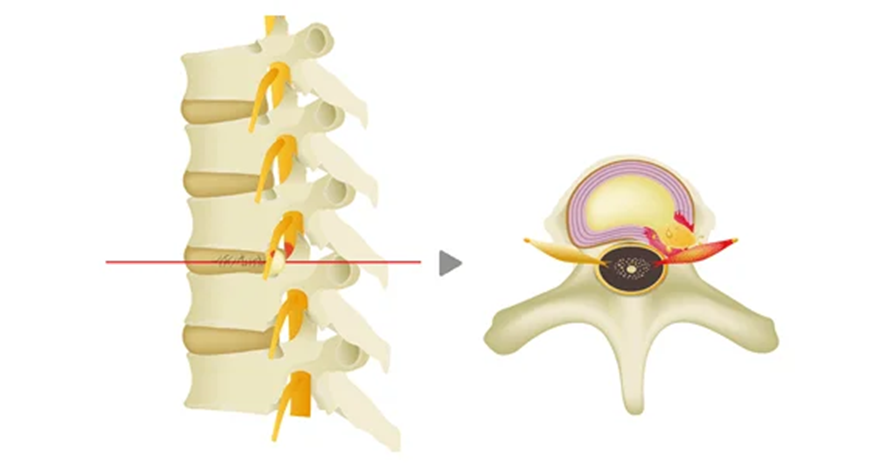
Between each vertebra lies an intervertebral disc. The disc consists of a gelatinous nucleus pulposus at its center, surrounded by an annulus fibrosus rich in collagen. The intervertebral disc is composed of these two structures: the nucleus pulposus and the annulus fibrosus.
Disc herniation occurs when a tear forms in the annulus fibrosus, causing the nucleus pulposus to protrude outward. When this occurs in the lumbar spine, it is referred to as a lumbar disc herniation.
The main causes of a herniated disc are genetic factors, aging, and the aging of the intervertebral disc due to the stresses of daily life. As the annulus fibrosus cracks due to aging and daily stress, the nucleus pulposus leaks out and loses moisture, causing the disc to thin and collapse. In particular, lifting heavy objects or engaging in strenuous sports in daily life can cause damage to the intervertebral disc.
Common Symptoms of Lumbar Disc Herniation
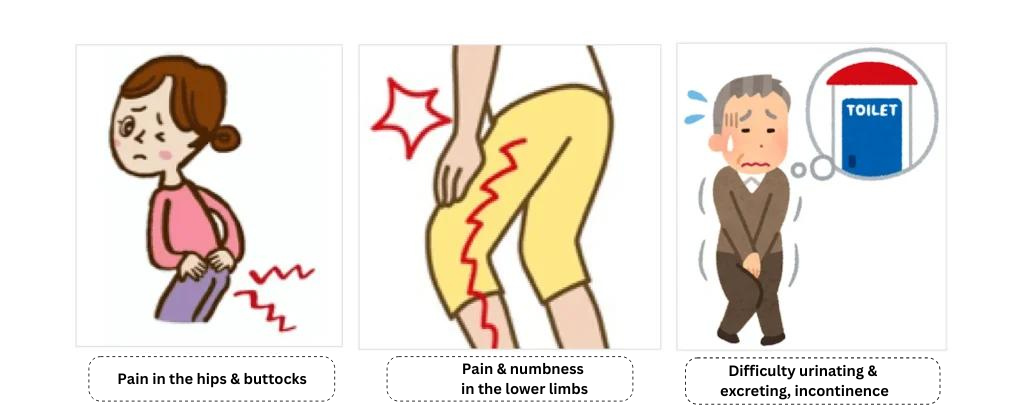
The main symptoms of a lumbar herniated disc include lower back pain, as well as pain and numbness in the buttocks and legs. While pain and numbness can occur anywhere in the lower body, pain extending from the buttocks to the back of the thighs—known as sciatica—is a classic symptom of lumbar herniation.
The spine may curve sideways, making it difficult to move, and the pain may worsen when lifting heavy objects. Symptoms may appear suddenly or develop gradually.
If the nerve is severely compressed, symptoms such as difficulty urinating or passing stool, or even incontinence, may occur.
Early Signs That are Often Overlooked
In its early stages, disc herniation is often mistaken for simple fatigue or mild back pain. Watch for the following warning signs:
 Pain worsens when bending forward or when in a sitting
Unilateral heaviness, pain, or numbness from the buttock to the leg
Reduced muscle strength in the leg
Intense stiffness in the lower back specifically when waking up
Sharp, electric shocks down the leg when coughing or sneezing.
Frequent tripping or an inability to walk on your heels.
If these symptoms persist for several days to weeks, early consultation with an orthopedic specialist is strongly recommended.
Of The Importance of Early Detection
Early diagnosis is critical.
Appropriate treatment at an early stage can prevent the progression of symptoms.
If early symptoms are overlooked and left untreated, the condition may worsen, potentially leading to long-term complications such as urinary or bowel dysfunction and difficulty walking.
Once nerve damage or other complications have progressed, surgical intervention is often the only option left, with a longer recovery time which may not lead to a full resolution of the condition.
If you notice even the slightest anomaly, do not ignore it or try to self-diagnose and seek professional medical evaluation immediately.
Treatment at Our Clinics
At our clinic, we specialize in the Cellgel Method, a minimally invasive procedure designed to repair rather than just remove damaged intervertebral discs.
Our clinic’s Cellgel Method involves injecting a therapeutic agent into the cracked area of the intervertebral disc; this agent turns into a gel and fills the crack, thereby providing a fundamental treatment. A key feature of this method is that it preserves the intervertebral disc, as the disc’s volume is not reduced and the medication remains in the disc as a gel-like implant after treatment.
Click here to learn more about the Discogel Method
If you are experiencing low back pain, consider consulting our clinic for evaluation.
Related Articles
Understanding Disc Herniation and Receiving the Most Appropriate Treatment For It
Recurrence of Herniated Discs: on the Necessity of Revision Surgery and the Criteria for it.