





Column Chronic Lower Back Pain Isn’t Just in Your Head: The Truth About the Brain, Nerves, and Persistent Pain
June 5, 2026
Chronic low back pain often develops when daily stress and strain on the lower back accumulate over time. This causes muscles to tense up and become stiff or knotted, leading to a heavy, dull pain that tends to persist for months or even years.
In this article, we will examine the deep neurological connection between chronic lower back pain, the brain, and the nervous system.

What is Chronic Lower Back Pain?
Chronic low back pain is frequently associated with intervertebral disc degeneration.
The intervertebral discs located between the lumbar vertebrae can lose their structural integrity and begin to deform due to aging and continuous mechanical stress. As the functional capacity of the disc declines, it triggers symptoms such as chronic pain — a condition medically known as disc degeneration disease.
When disc degeneration progresses, the annulus fibrosus (the outer ring of the disc) cracks, allowing the internal nucleus pulposus (the gel-like center of the disc) to leak outward and cause localized inflammation. This condition is called disc herniation, and it frequently leads not only to localized lower back pain but also to radiating pain and numbness in the buttocks and lower limbs.
Furthermore, when the stability of the spine is compromised due to the degeneration and deterioration of the intervertebral discs, it may stimulate the formation of bone spurs (osteophytes) as the body attempts to stabilize the spine. These spurs can encroach upon and compress the spinal canal, manifesting as symptoms of spinal canal stenosis, such as intermittent claudication (leg pain or weakness while walking).
In this way, age-related disc degeneration can contribute to a variety of spinal disorders and chronic pain conditions.
The Relationship Between Chronic Low Back Pain, the Brain, and the Nervous System
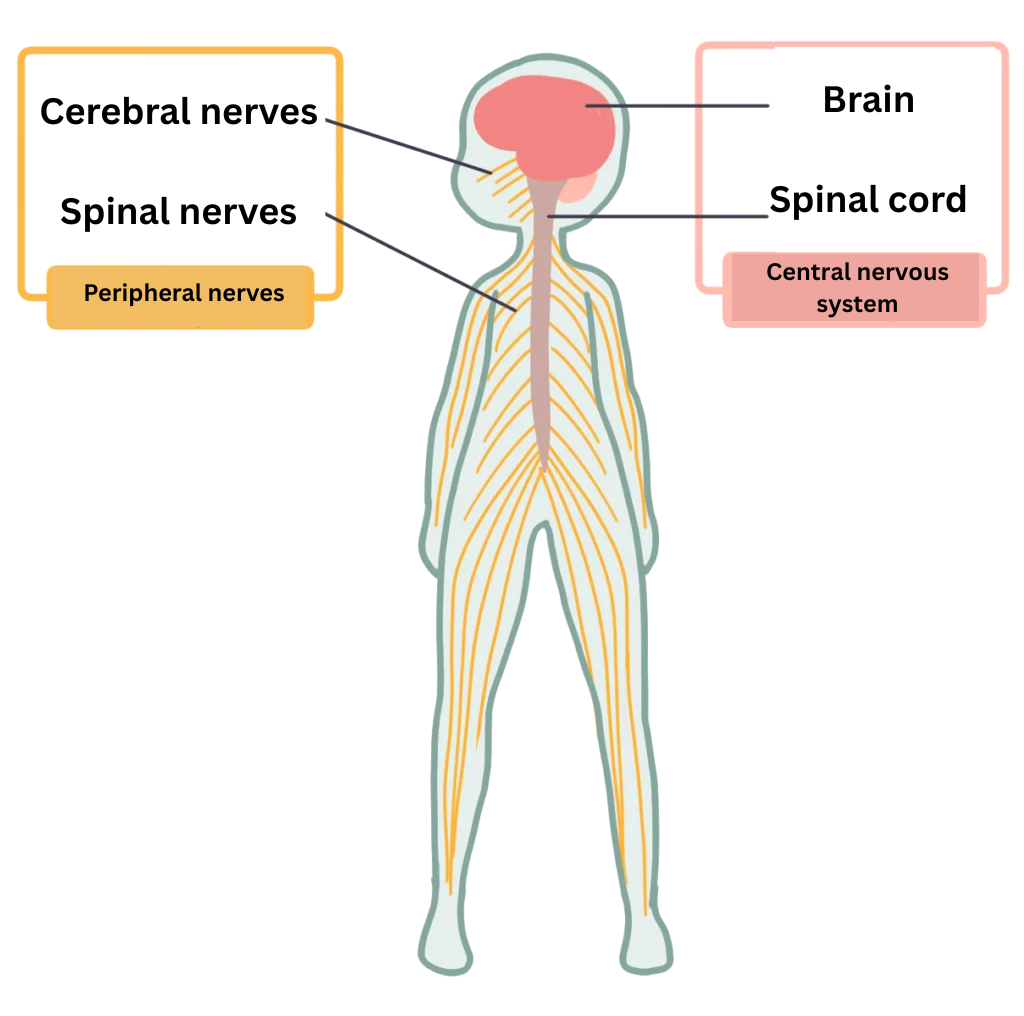
Chronic low back pain is not caused solely by structural damage in the spine. Functional changes within the brain and nervous system can also play an important role in maintaining and amplifying pain.
Pain Memory and Brain Atrophy
Pain is essentially an alarm system designed to alert the body that something is wrong.
However, when pain persists for a long time, the brain can effectively “learn” or memorize that pain. Ongoing fear, anxiety, and anticipation of pain may alter the function of regions involved in pain processing, causing even minor stimuli to be perceived as intense pain.
Decline of the Descending Pain inhibitory System in the Brain
The brain possesses a natural mechanism for reducing pain signals, known as the descending pain inhibitory system.
However, when chronic stress or anxiety persists, this inhibitory function fails to work properly, causing nerves to become hypersensitive and leading to the intensification or chronicity of pain.
Central and Peripheral Sensitization
When pain continues over an extended period, both the central nervous system and peripheral nerves can become hypersensitive. This phenomenon, known as sensitization, lowers the threshold at which pain is perceived. Consequently, movements or activities that would normally be painless may trigger exaggerated pain responses.
The Vicious Cycle of Autonomic Dysfunction and Muscle Tension
When stress disrupts the balance of the autonomic nervous system (the sympathetic and parasympathetic nerves), blood vessels constrict, leading to chronic muscle tension and poor blood circulation.
Muscle stiffness generates new pain-inducing substances, creating a vicious cycle where the pain itself becomes a source of further stress.
Alleviating Chronic Lower Back Pain
The Importance of Addressing the Root Cause With the Right Treatment
To effectively resolve chronic lower back pain, the first and most crucial step is to eliminate the underlying nerve compression. It is vital to be evaluated by a spine specialist at a medical institution to receive an accurate diagnosis and an appropriate treatment plan.
Receiving appropriate treatment early on can break the vicious cycle of pain, prevent serious underlying diseases from being overlooked, and significantly improves your overall Quality of Life (QOL).
Re-evaluating Daily Lifestyle Habits
As mentioned above, psychological and lifestyle factors play a major role in chronic pain, making lifestyle adjustments highly essential. It is crucial to maintain awareness of proper posture and avoid sitting or standing in the exact same position for extended periods. Incorporating light aerobic exercises, such as walking (ideally 30 minutes, twice a week), along with daily stretching, is highly effective for stimulating blood circulation.
Treatment at Our Clinics
When dealing with chronic lower back pain, addressing the root cause through specialized medical intervention is often necessary.
Our clinic offers the Cellgel Method, an advanced treatment specifically designed to repair damaged intervertebral discs.
During the Cellgel Method, a unique therapeutic agent is injected with precision into the cracked sections of the disc. The agent transforms into a cohesive gel implant that fills and seals the tears, addressing the structural issue at its source. A distinct advantage of this treatment is that it preserves the natural disc; the gel remains inside permanently to support the structure without reducing the overall volume of the intervertebral disc.
Click Here to Learn More About the Cellgel Method
Additionally, in close collaboration with the OJ Wellness Center, we provide specialized rehabilitation programs tailored for lower back pain that integrate holistic Eastern Medicine and Ayurvedic clinical approaches.
Click Here to Learn More About the OJ Wellness Center
If you are struggling with chronic low back pain, we encourage you to book a consultation with our specialists for a comprehensive evaluation and treatment plan.
Related Articles
How to Treat Chronic Low Back Pain: Find the Right Treatment for Your Condition
How to Address Chronic Back Pain: Does that Type of Pain Require Surgery or not?
A Specialist Explains to Patients Struggling with Chronic Low Back Pain Why It Won’t Heal by Itself